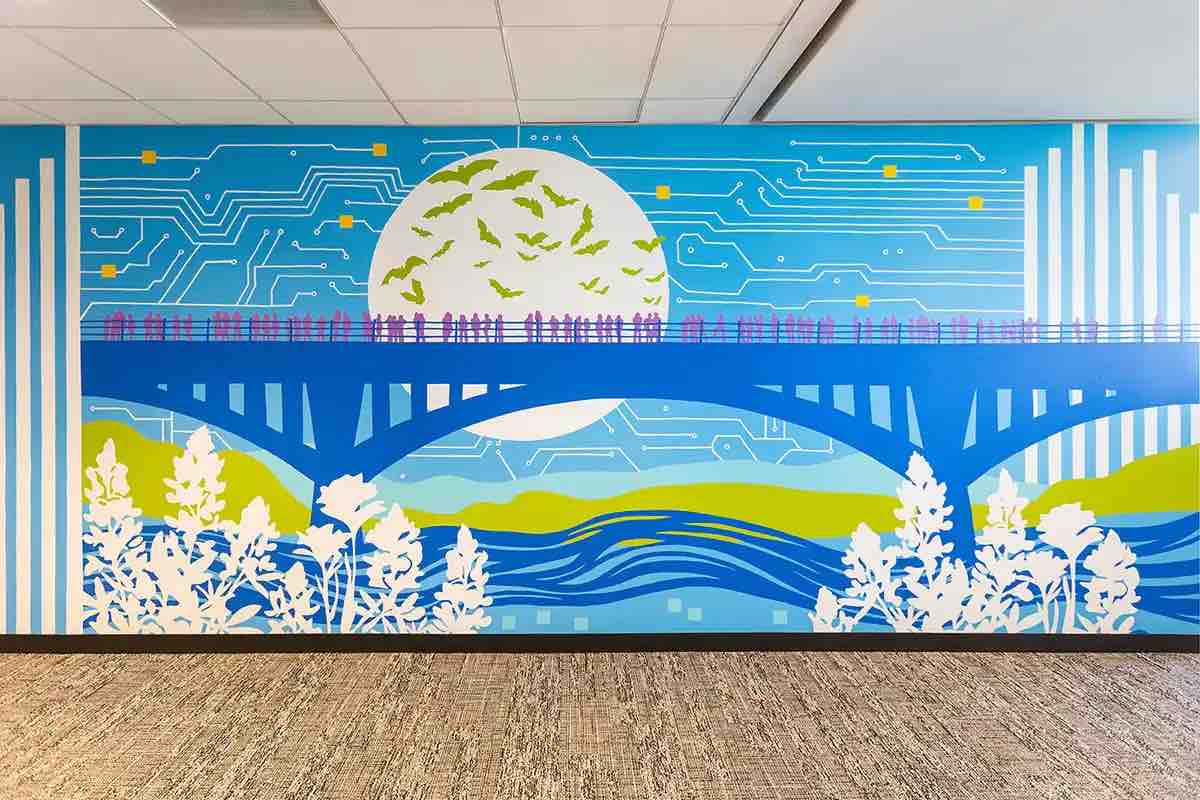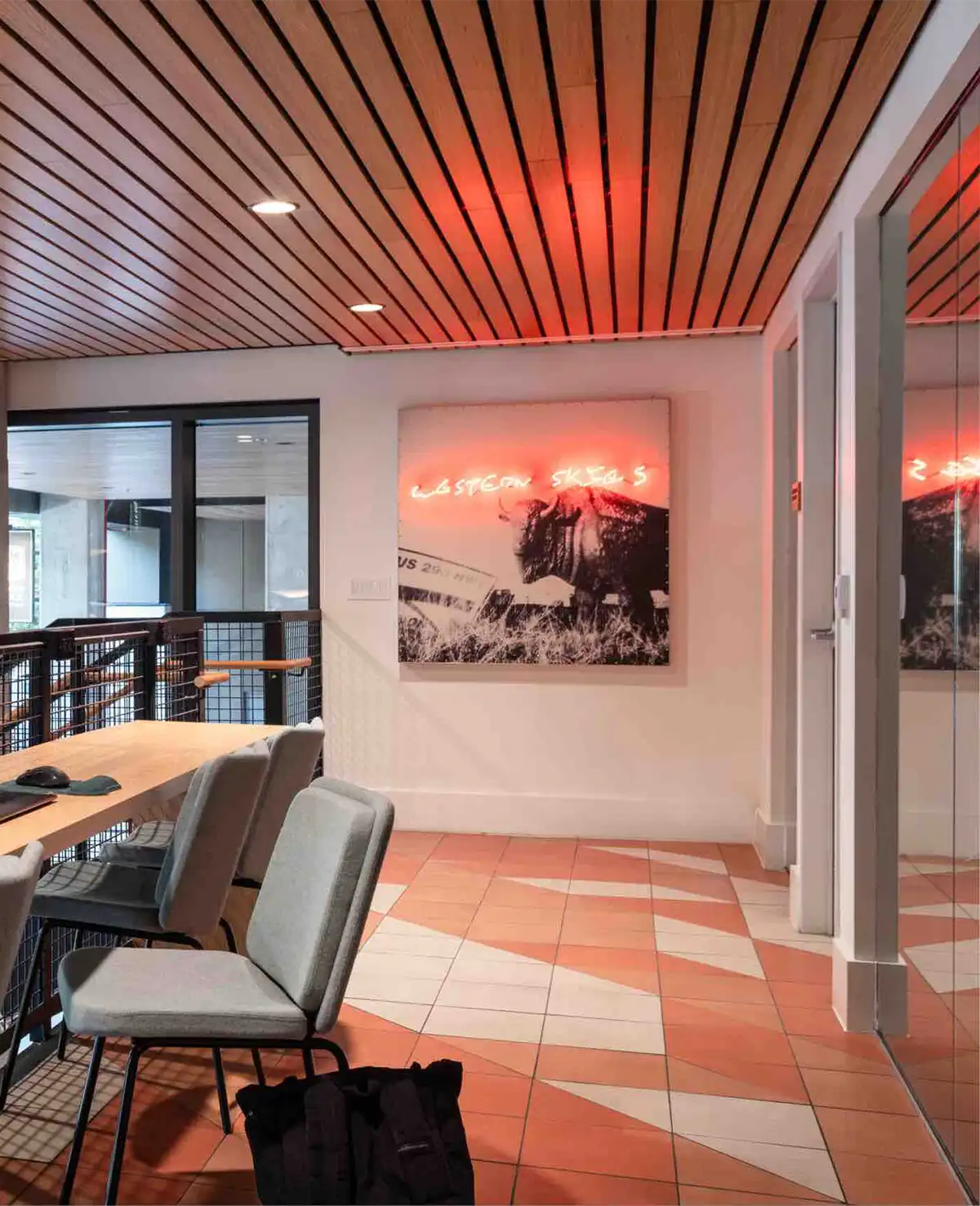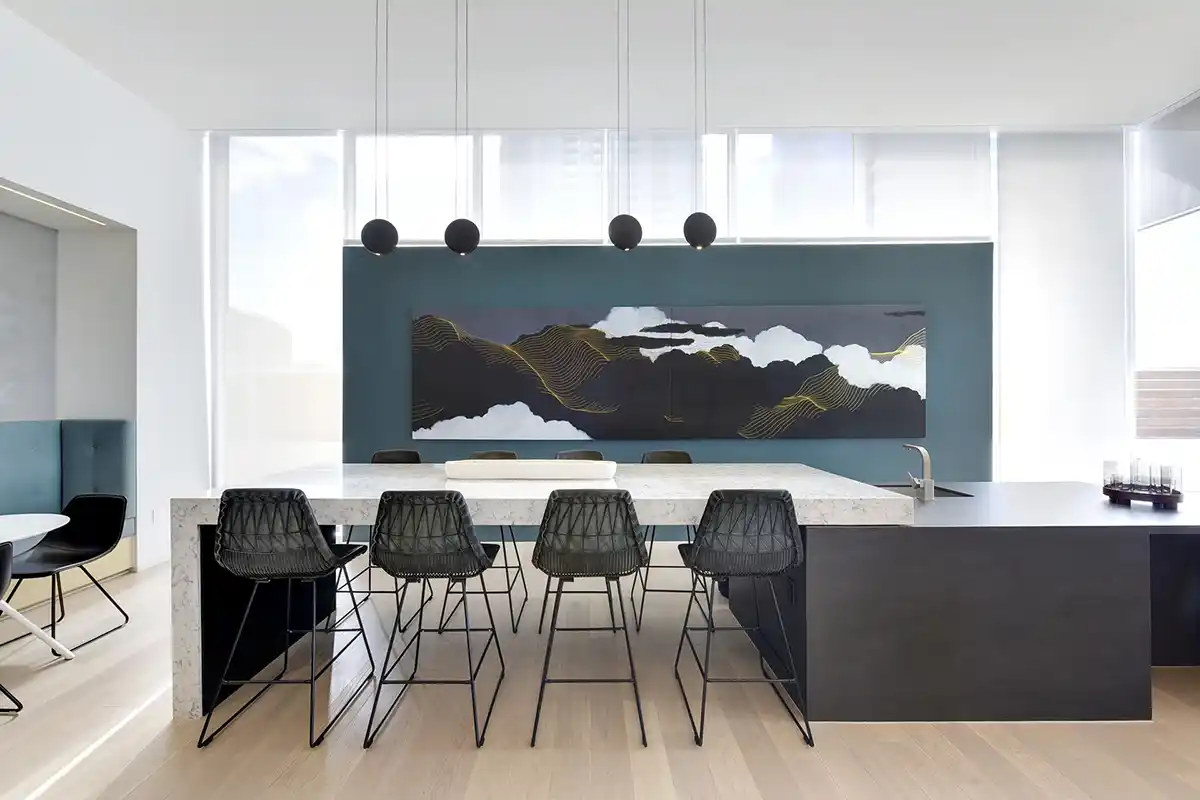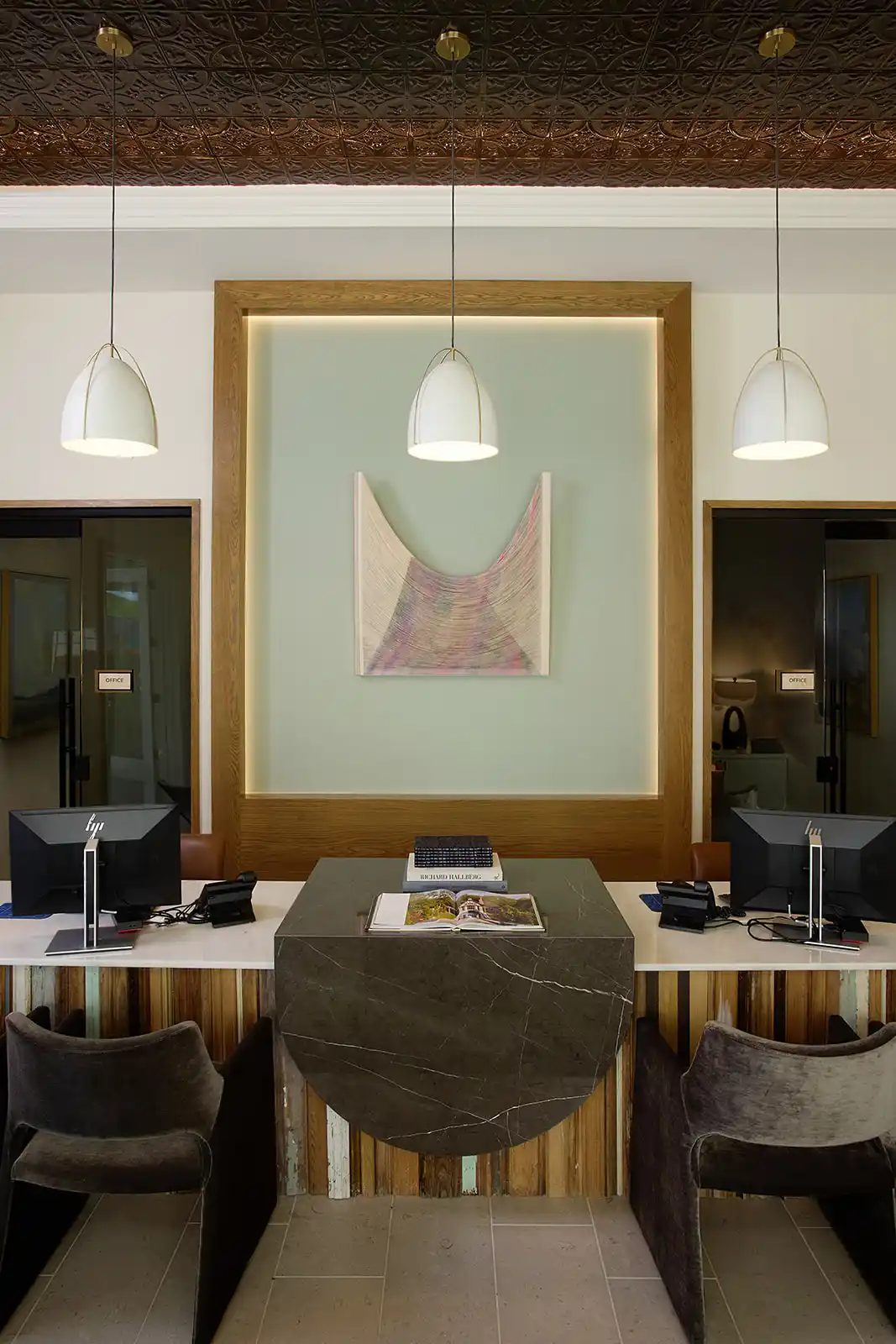

In 2026, experience has replaced occupancy as the defining metric of a commercial real estate (CRE) project. Industry leaders agree that the fundamental value of a building is now tied to how it makes users feel. Gensler’s 2026 Design Forecast announces that, this year, “Experience becomes the true measure of real estate value.” Cushman & Wakefield advocates for Experience-Based Working and JLL says, “Experience is the new value driver,” adding that “people don’t reject the office – they reject a bad office experience.”
Designers are being called upon to create authentic environments that resonate with people and support their well-being while still driving measurable business value. In this article, we’ll show you how art is one of the most effective tools at your disposal. In fact, art should be included in your budget as performance infrastructure. It elevates experiences across all sectors by meeting neuro-responsive design goals, driving placemaking, and fostering community connection. Plus, with proper care, art lasts longer than your floors, fixtures and furnishings. Interior designers and architects, you’re going to want to read this.
Art as a Neuro-Responsive Design Tool
To meet this moment, projects are now being designed with emotional intelligence, often called neuro-responsive design. The goal is to create spaces that actively improve the mental and physical well-being of the people who use them. The burgeoning science of neuroaesthetics tells us that art is an invaluable tool in this endeavor.
Encountering art that resonates triggers the brain’s default mode network (DMN), forging deep emotional connections and reducing stress. Sourcing art made with materials that calm the nervous system like soft fiber, wood, clay, or wax, can also be a huge help in creating restorative zones.
The ROI of this approach is highly measurable. Research from the University of Exeter found that employees working in spaces enriched with art and plants were up to 32% more productive, 45% more engaged, and experienced up to a 60% increase in well-being.
Up to
Source: Prism and University of Exeter
Up to
Source: Prism and University of Exeter
Using Art to Create a Commute-Worthy Office
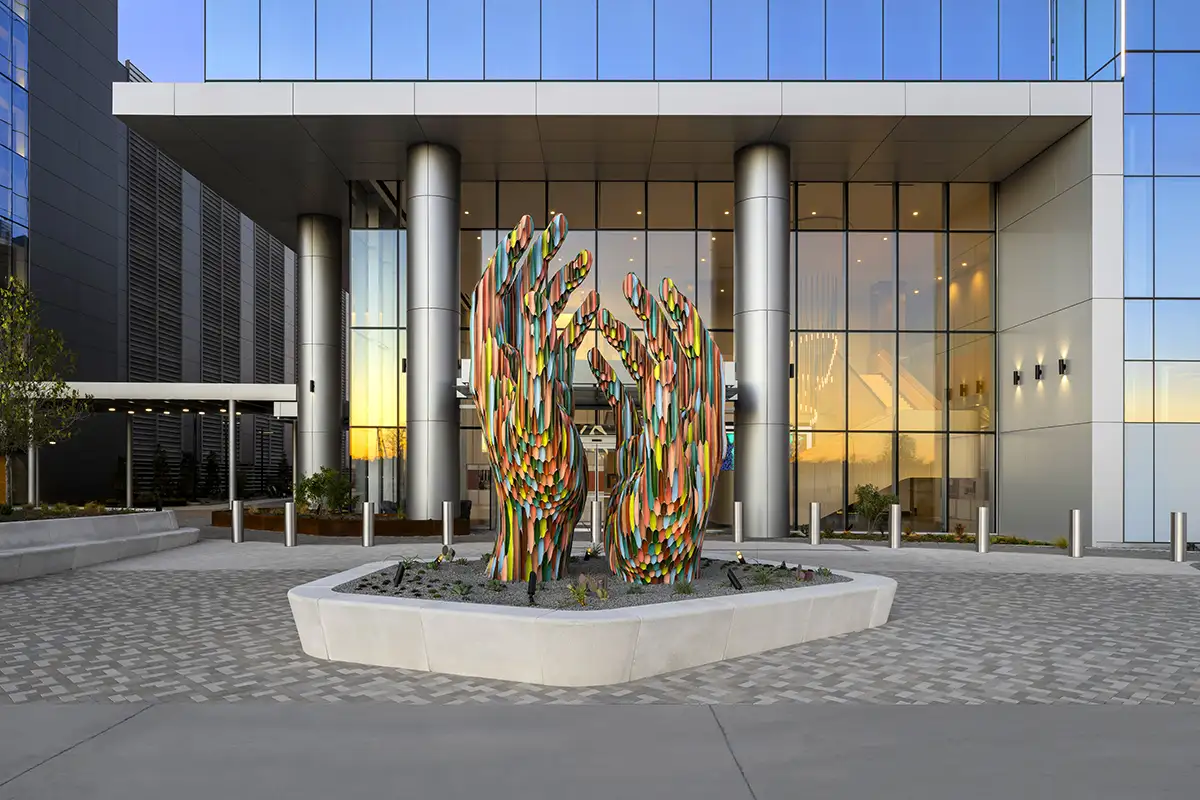
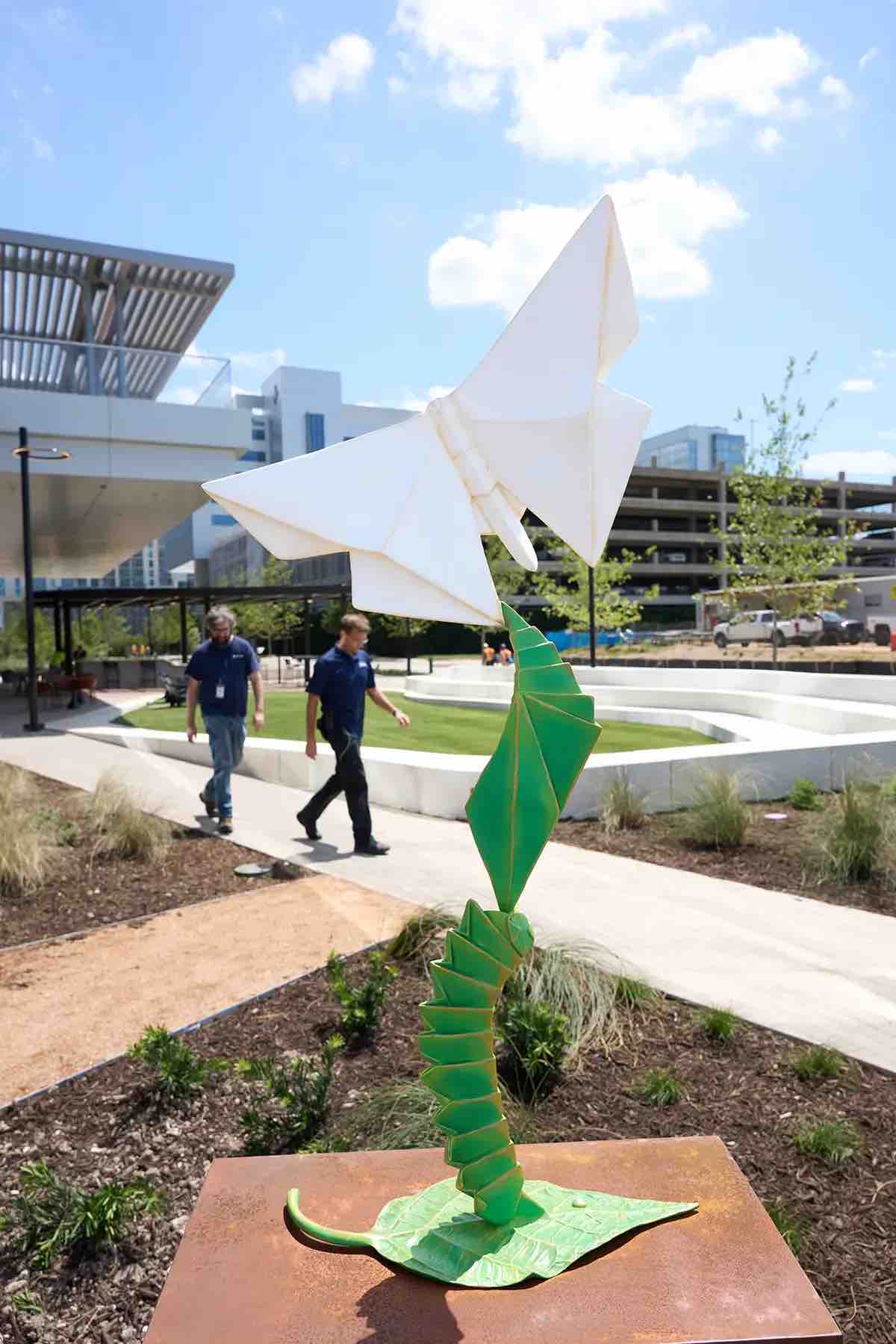
The global corporate look is being replaced with hyper-localized, cultural storytelling. For example, at TIAA’s new corporate center, in addition to traditional branding, they curated over 160 original artworks to tell their story.
Gallery: Two statement pieces elevate the experience at TIAA’s new corporate center in North Texas. Click images for more details. Art consulting by Art + Artisans.
Art for Change Management and Organizational Culture
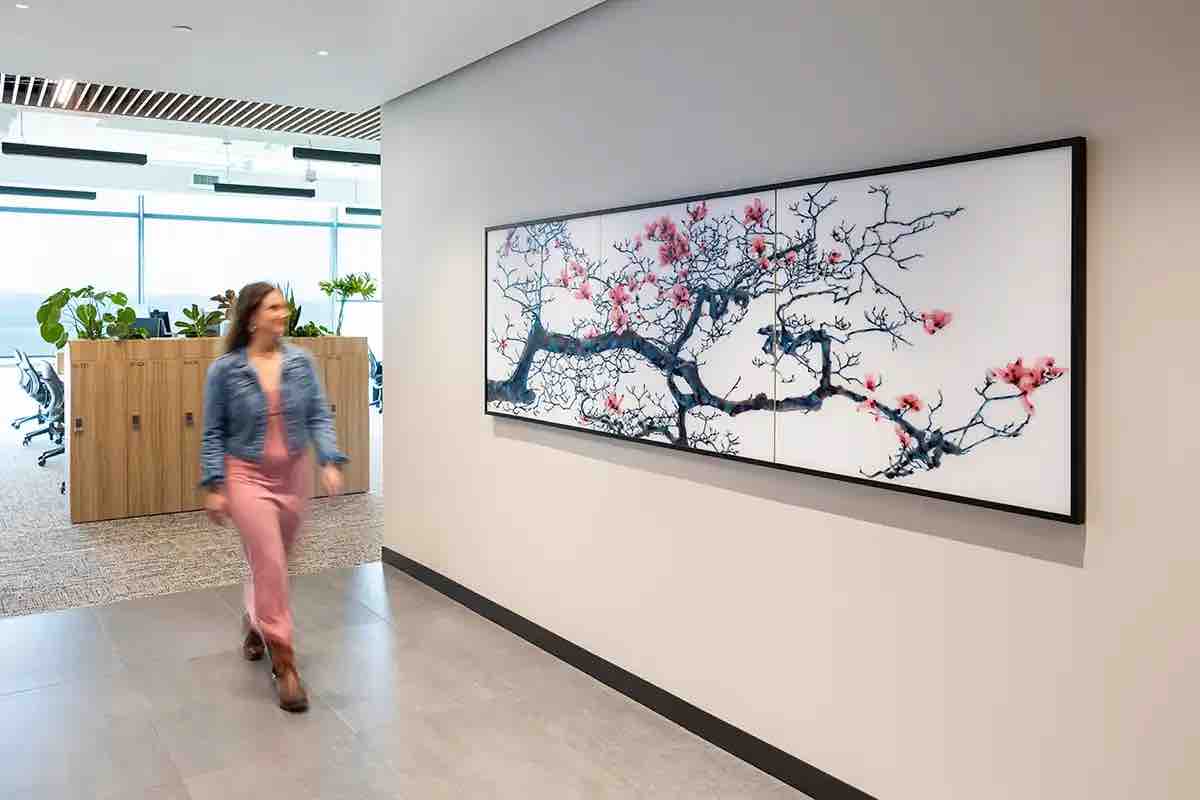
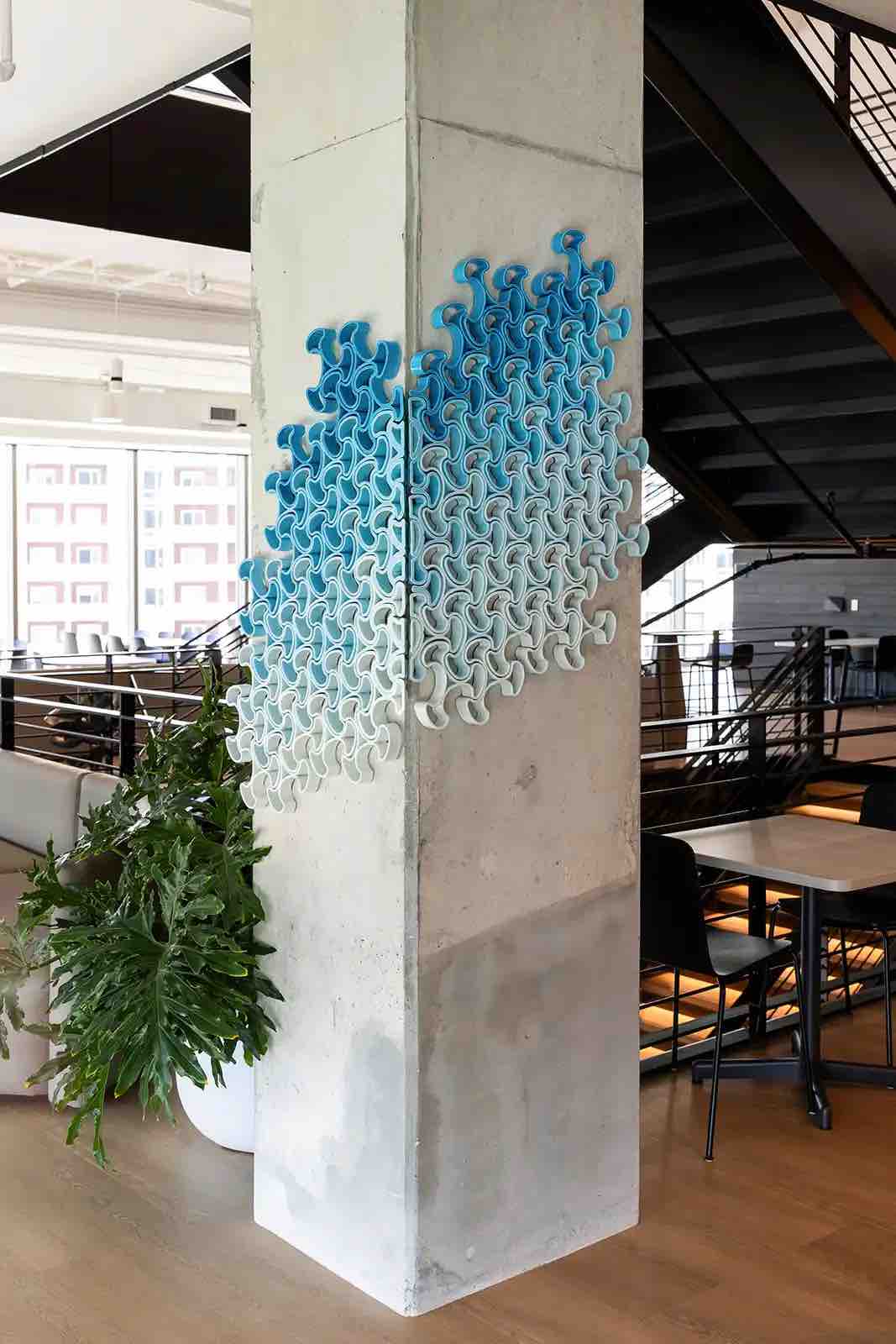
Art acts as a powerful change management tool when companies transition to new work models or spaces. At Tokyo Electron’s (TEL) Austin headquarters, employees helped curate 25 local artists to bridge the cultural gap between their old rural campus and their new urban tower.
Gallery: TEL commissioned a strategic art package that honors technology, their Japanese heritage, elements of nature, and their Austin, Texas location. Click images for more details. Art consulting by Art + Artisans.
Art for Elevating Multifamily Experience and Asset Value
The shift toward experience as the ultimate metric of success is just as profound in the multifamily sector. Today people spend far more time in the rental market. They value amenities that cater to their lifestyles and help foster a sense of community.
Art is an indispensable tool for designing spaces that elevate resident experiences and solve developer challenges like tenant churn and slow lease-ups. Research shows that 90% to 95% of our decisions and behaviors are shaped by emotion. The science of neuroaesthetics tell us that art has the power to tap into our emotions. By thoughtfully curating art that speaks to your resident base, you can design multifamily spaces that excite them and fill them with the sense that this is where they belong.
Here’s how art is being used to elevate the multifamily experience.
Transforming Common Amenities into Magnetic Destinations
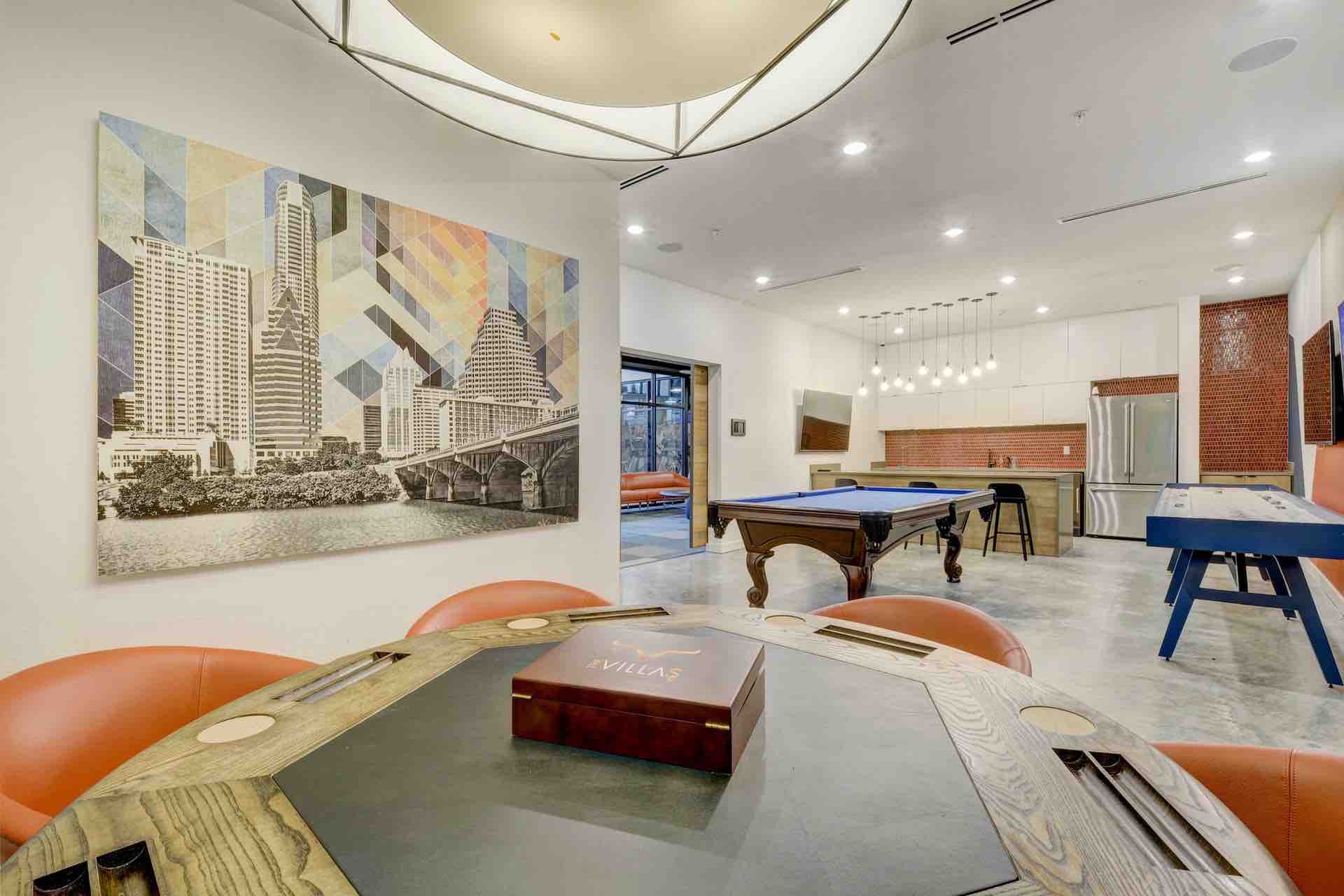
With the right art, common areas like coworking spaces or coffee stations become infused with character and purpose. Residents can enjoy elevated, immersive experiences without ever leaving home. This, says Jonathan Delcambre, residential practice area leader at Gensler, is when you start to see positive ROI.
Gallery: Art helps turn multi-family amenity spaces into destinations where people want to spend time. Click images for more details. Art consulting by Art + Artisans.
Fostering Authentic Community and Belonging with Art
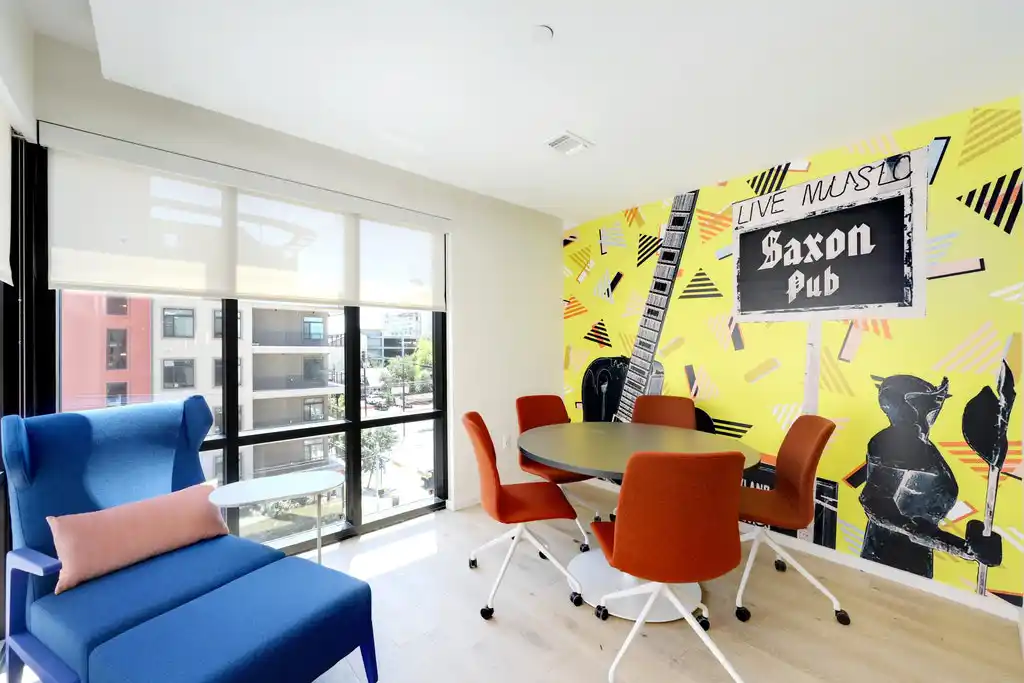
Art that reflects the local culture and history of the neighborhood sparks conversations and shared experiences among residents. It’s a multifamily trend on the rise according to Multifamily Executive. Phyllis Hartman, founder and principal of Hartman Design Group tells MFE multifamily interiors that reflect local culture, geography, and history elevate the experience beyond “general luxury” and create memorable, identity-rich environments.
Gallery: Art at two student housing properties in Austin, Texas draws on the local community to help connect students through their shared experiences. Click images for more details. Art consulting by Art + Artisans.
Injecting Utility Areas with Unexpected Style and Grandeur
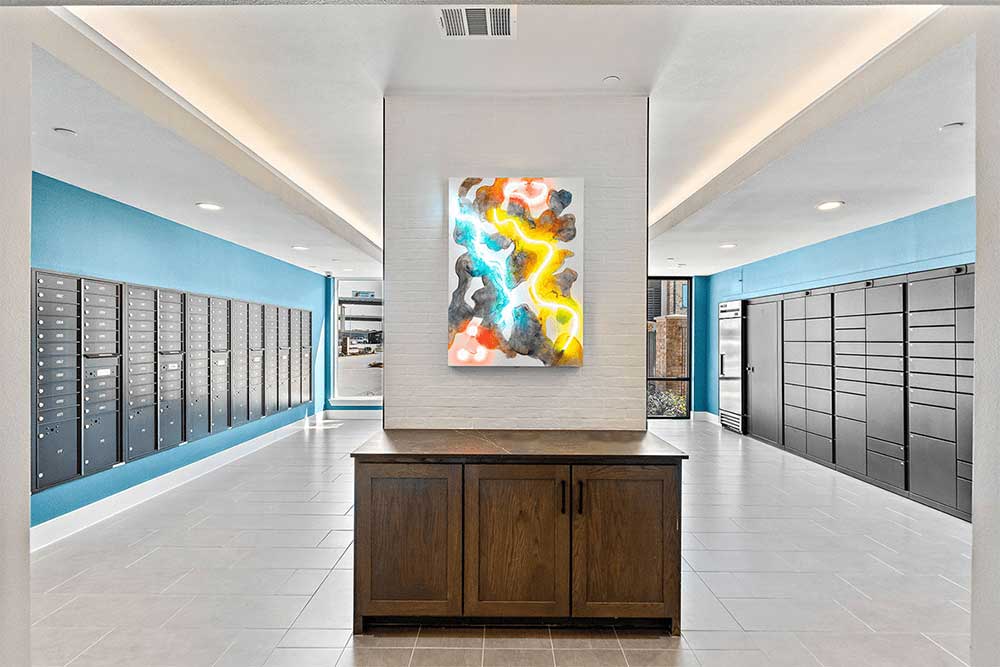
Utility areas don’t have to be treated as a mere pass-through. When art is strategically integrated into spaces, residents enjoy spending time in them.
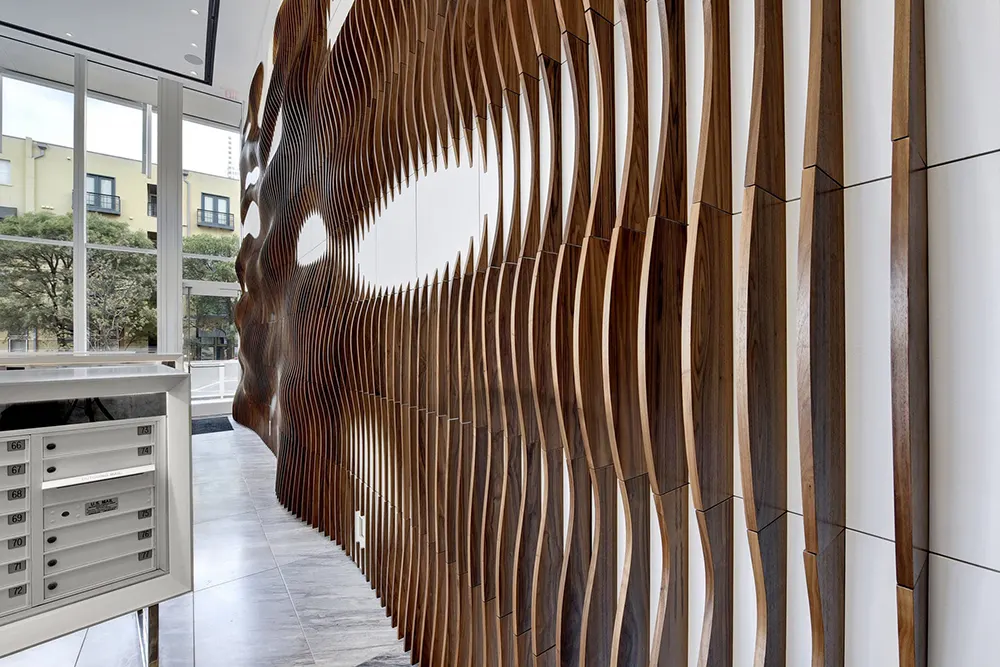
At The Independent luxury residential tower in Austin, Texas the mailroom becomes a meeting place for neighbors in the center of the lobby. A wall sculpture of undulating wood is juxtaposed with the steel mailboxes, marble floors, and concrete building to culminate in a feeling of grandeur.
Gallery: Even utility spaces are elevated with the help of original art at these two multi-family properties. Click images for more details. Art consulting by Art + Artisans.
Harnessing the Power of Public Art to Elevate Experience
“The next wave of city design blurs the boundaries between culture, commerce, infrastructure, and community,” says Gensler. While JLL’s research shows that US offices located in “lifestyle districts” with access to amenities like entertainment venues, outdoor pavilions and waterfront attractions command a 32% rental premium. Another survey of theirs shows that 67% of people want to work in a vibrant neighborhood. Among 25-34 year olds, that percentage increases to 74%. Public art is the ultimate tool for this kind of creative placemaking because it fundamentally alters community engagement. Here’s how.

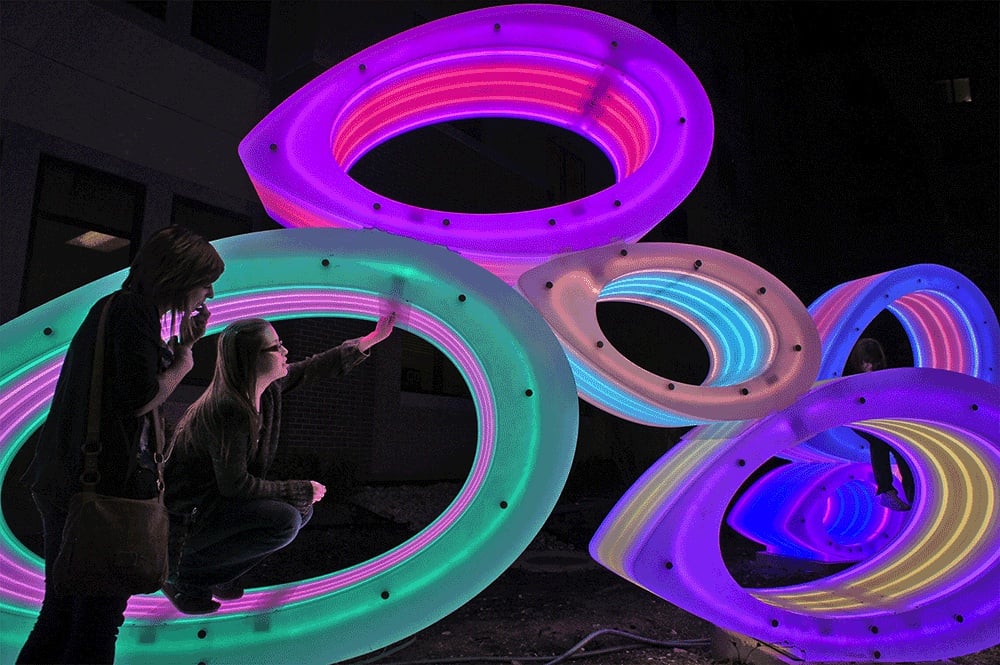
Image: An illuminated sculpture on the lawn of a student housing facility at Texas State University creates an immersive, interactive experience that draws in foot traffic from all over campus. Art consulting by Art + Artisans.
Public Art Humanizes the Built Environment
A study on creative placemaking by Toronto Metropolitan University found that participants consistently described public spaces infused with art as more welcoming, vibrant, and culturally diverse, resulting in a 63% increase in positive emotions among users. The study also documented a 77% increase in likelihood that they would refer these places to their friends and colleagues and a 74% increase in likelihood of social media sharing about them.
Public Art Drives Massive Foot Traffic and Economic Vitality
- The Cincinnati Study: Research from the University of Cincinnati revealed that neighborhoods with murals saw a 30% increase in weekend foot traffic compared to mural-free zones. When those murals were integrated into mixed-use districts with retail and dining, foot traffic skyrocketed to five times the city average.
- Miami Design District: Art completely transformed a neglected warehouse district in Miami into a global luxury retail destination. Urban planners credit the deliberate infusion of outdoor sculptures and murals for a 47% surge in foot traffic over four years.
- Event-Driven Revenue: Temporary public art activations can also provide massive economic boosts. Cincinnati’s 2024 Blink public art festival attracted over 2 million attendees and generated over $205 million in direct economic impact in just four days.
Public Art Enhances Public Safety
The University of Cincinnati study found that violent crime dropped by 28% in areas where murals were added to mixed-use developments. Public art literally acts as functional infrastructure that physically protects the community.
Public Art is a Strategic Advantage for Permitting and Approvals
Because public art directly solves for so many of these goals prioritized by cities, it can help generate tremendous goodwill for your project with city officials. This can ease community opposition and significantly streamline the permitting and approval processes, avoiding costly project delays.
Conclusion
To maximize the benefits of art for your design, stop waiting for the final phase of your project to consider art. Instead, position art as critical infrastructure during schematic design. By partnering early with an art consultant, you can ensure that wall materials, structural supports, and lighting are perfectly calibrated for art installations. And you can perfectly coordinate the artwork with your Furniture, Fixtures, and Equipment (FF&E) packages, ensuring a cohesive narrative where the art complements the textural and color palettes of the space.
If experience is the value of your project in 2026, art is the investment that will yield you the highest returns. By incorporating strategically selected art into your architectural framework, you can transform properties into vibrant, compelling ecosystems where people genuinely want to be.
Learn More About Experience as the True Measure of a Project’s Value
- Design Forecast 2026 [Gensler]
- Experience-Based Working: Putting People First is the Way Forward [Work Design Magazine]
- Global Real Estate Outlook: Six forces reshaping commercial real estate in 2026 [JLL]
- Beyond the Clubroom: 8 Amenity Trends Shaping Multifamily in 2026 [Multifamily Executive]