
Art provides substantial benefits in healthcare settings for patients, staff, and families. A large body of evidence shows visual art provides patients with positive distraction and reduces anxiety and pain levels. Hospitals all over the world are now investing in art programs as part of their healthcare approach. Art + Artisans founder Jennifer Brener Seay spoke with Executive Curator Allison Hays Lane at University Health in San Antonio to learn more about art for healthcare settings and their SaludArte Program.
University Health and SaludArte: Art of Healing Program
University Health in San Antonio is the third largest hospital system in Texas and the only Level 1 trauma center for both adults and children in the South Texas region. The SaludArte: Art of Healing Program was established by University Health in 2010 to integrate original art, design enhancement, and bedside programming into healthcare buildings. To our knowledge, it’s the largest original art program at any Texas hospital. Laid out in three phases of site-specific design enhancement, public art in the form of large-scale sculpture, and art procurement, the program follows an evidence-based model for art in healing integration.
Jennifer Brener Seay (JBS): How did the SaludArte Program get started?
Allison Hays Lane (AHL): George B. Hernandez Jr., who was our CEO for 20 years, had this vision to not only upgrade the facilities and new buildings, but to follow evidence-based design by integrating art for a more compassionate setting.
AHL: If you use art to create positive distraction and a calmer environment for wayfinding, the patients respond better; the families respond better; there is higher retention of staff. This is University Health’s vision. They believe in it. SaludeArte Program is now more than 15 years old. So, I know that we’re on the right track.
Gallery: “Madonna and Child,” by Kaldric Dow and “Painted Courtyard” by Erin Curtis from University Health’s SaludArte Program. Photos: Mark Greenberg.
Site Specific Design Enhancement
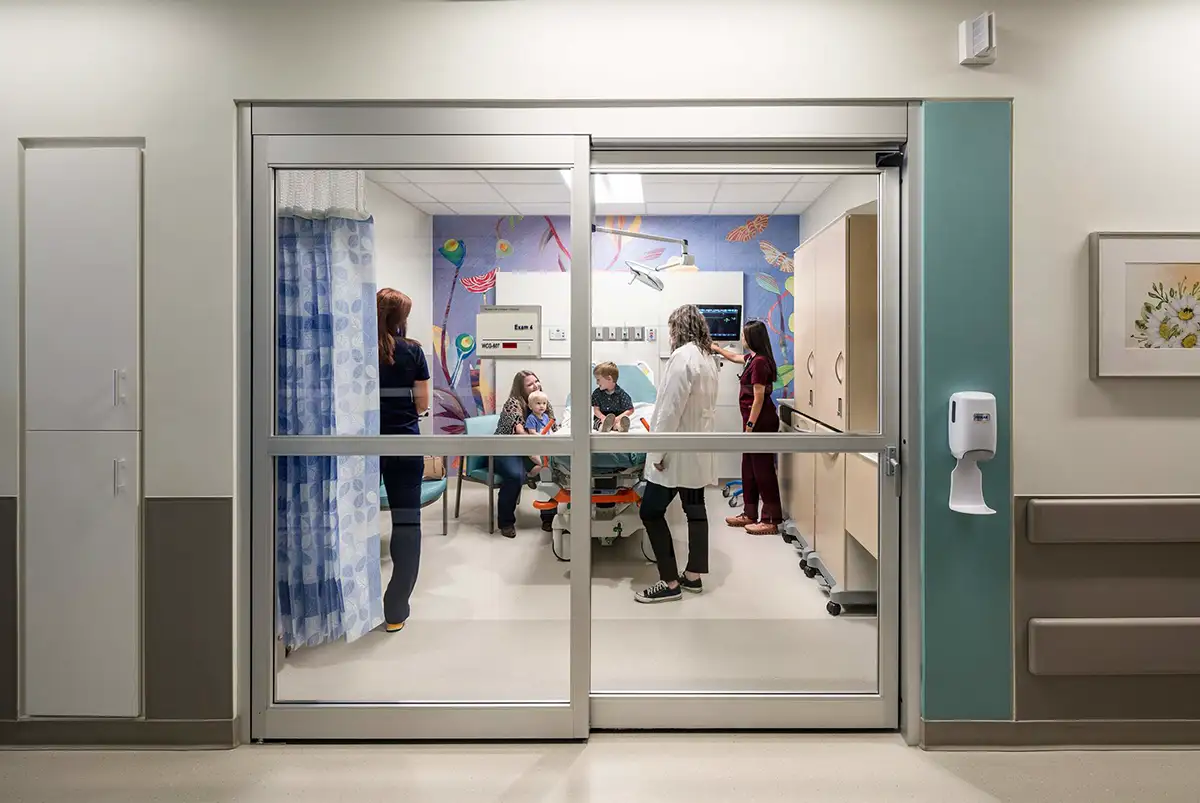
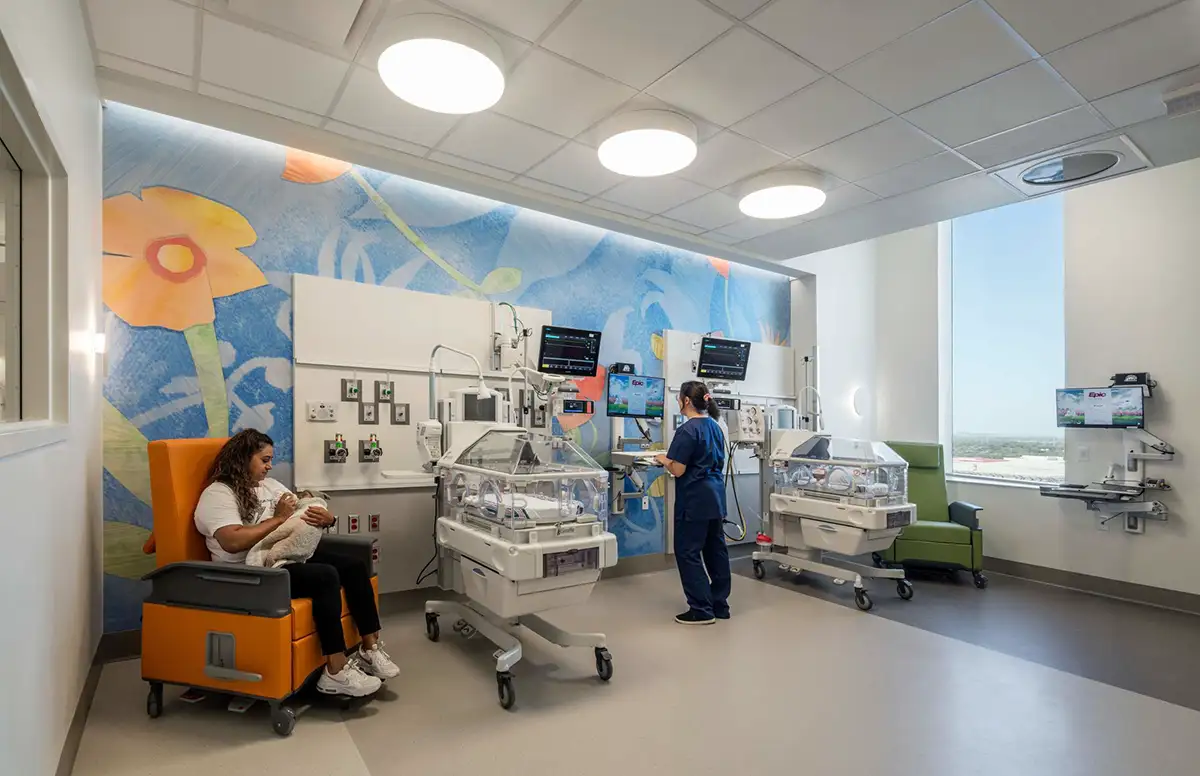
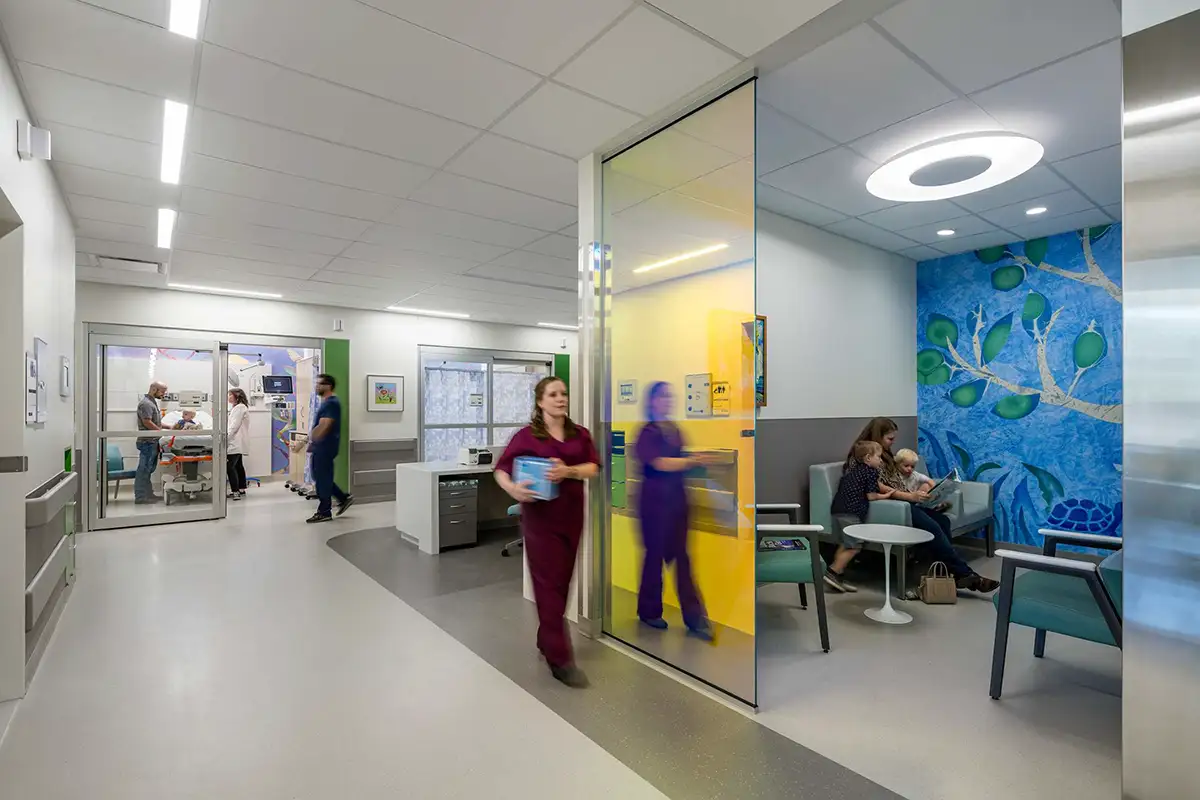
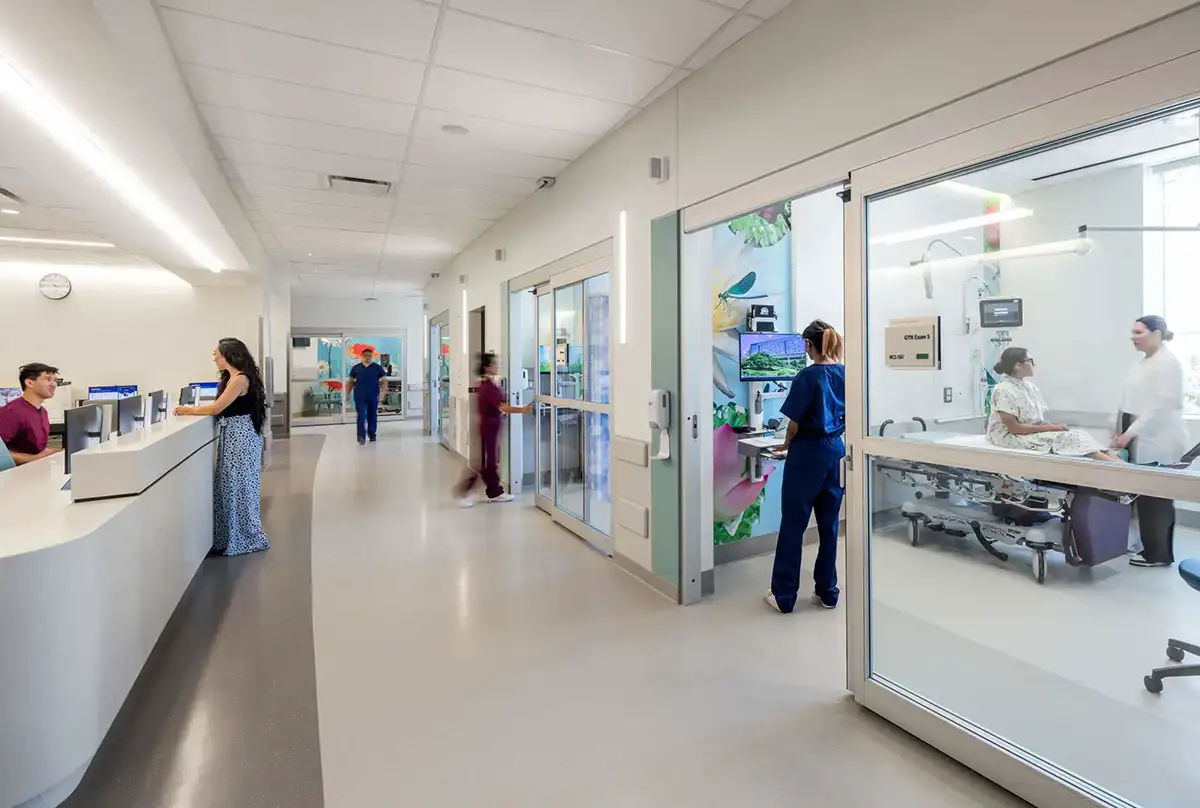
When University Health constructs a new healthcare facility, SaludArte Program gets involved during site-specific design enhancement. This is a process where the architect designs the environment for the specific location and community who will use the facility. SaludArte Program provides input so that artwork can be built into the building through such materials as glass, metal, screens, staircases and acrylic wall films.
AHL: I don’t think any other hospital creates the acrylic Acrovin wall films that we do from original art. They’re gorgeous because the originals we use to make the films are all handmade, hand-collaged, hand-painted. They’re just stunning, and they’re blown up to large-scale.
This attention to detail creates a more compassionate and supportive environment for patients.
AHL: If you’ve been a patient being wheeled down the hall, it can feel like an old, scary movie where the person’s on the gurney, and they see the lights passing above their head. What you see in our hospital is a better lighting system. The lights aren‘t glaring. You see beautiful art going past you, even on the transport floors going to and from surgery.
AHL: If you’ve ever been inside a surgical theater, it’s pretty sterile and scary. There’s no color. There are just bright lights and all this metal. It’s very oppressive.
AHL: Here, going into sedation and the operating theaters, you see art; you see color.
Gallery: During new construction, SaludArte Program provides input to the architect so that original art can be built into University Health facilities using such materials as acrylic wall films. Photos: University Health Website
Large-Scale, Site-Specific Sculpture
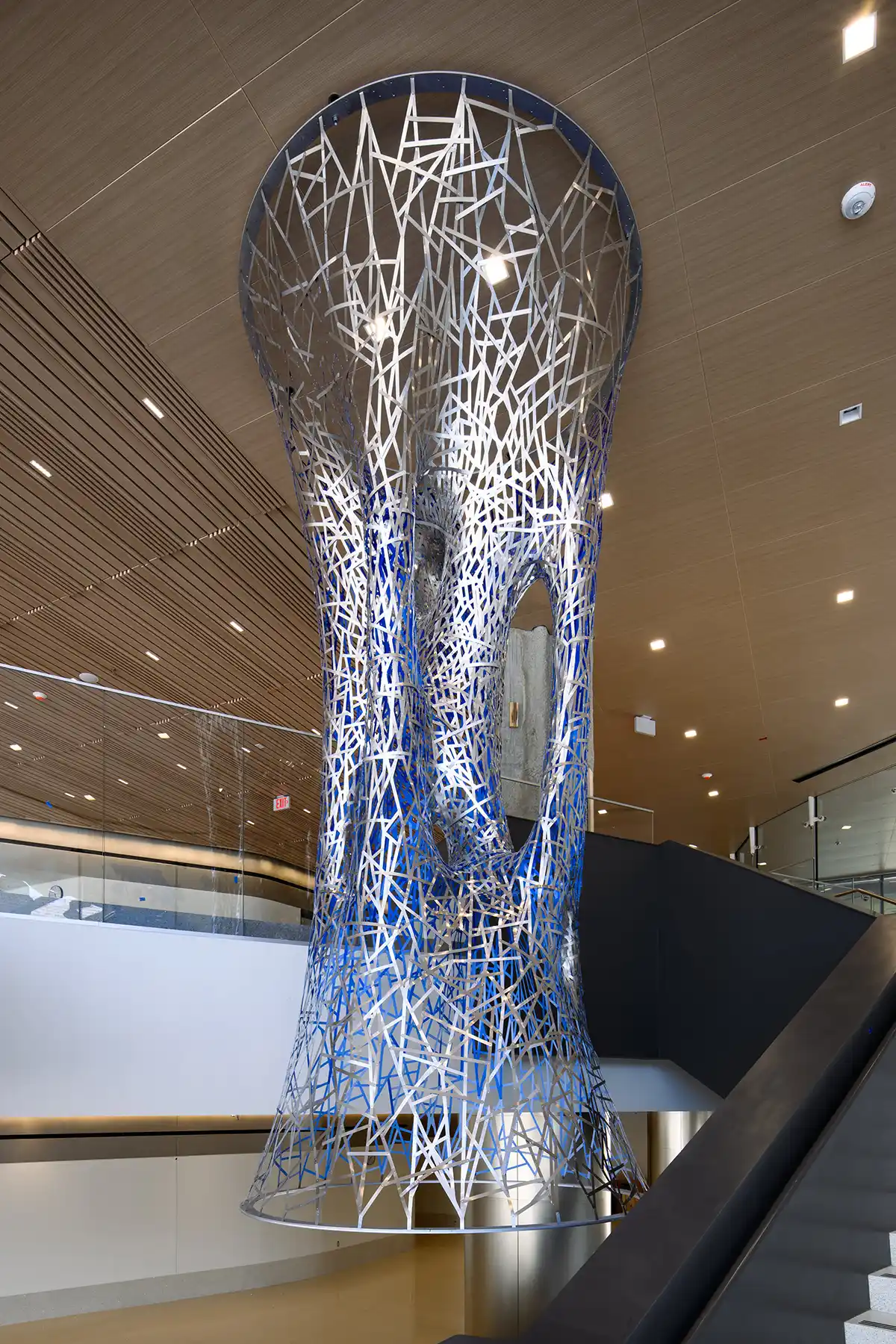
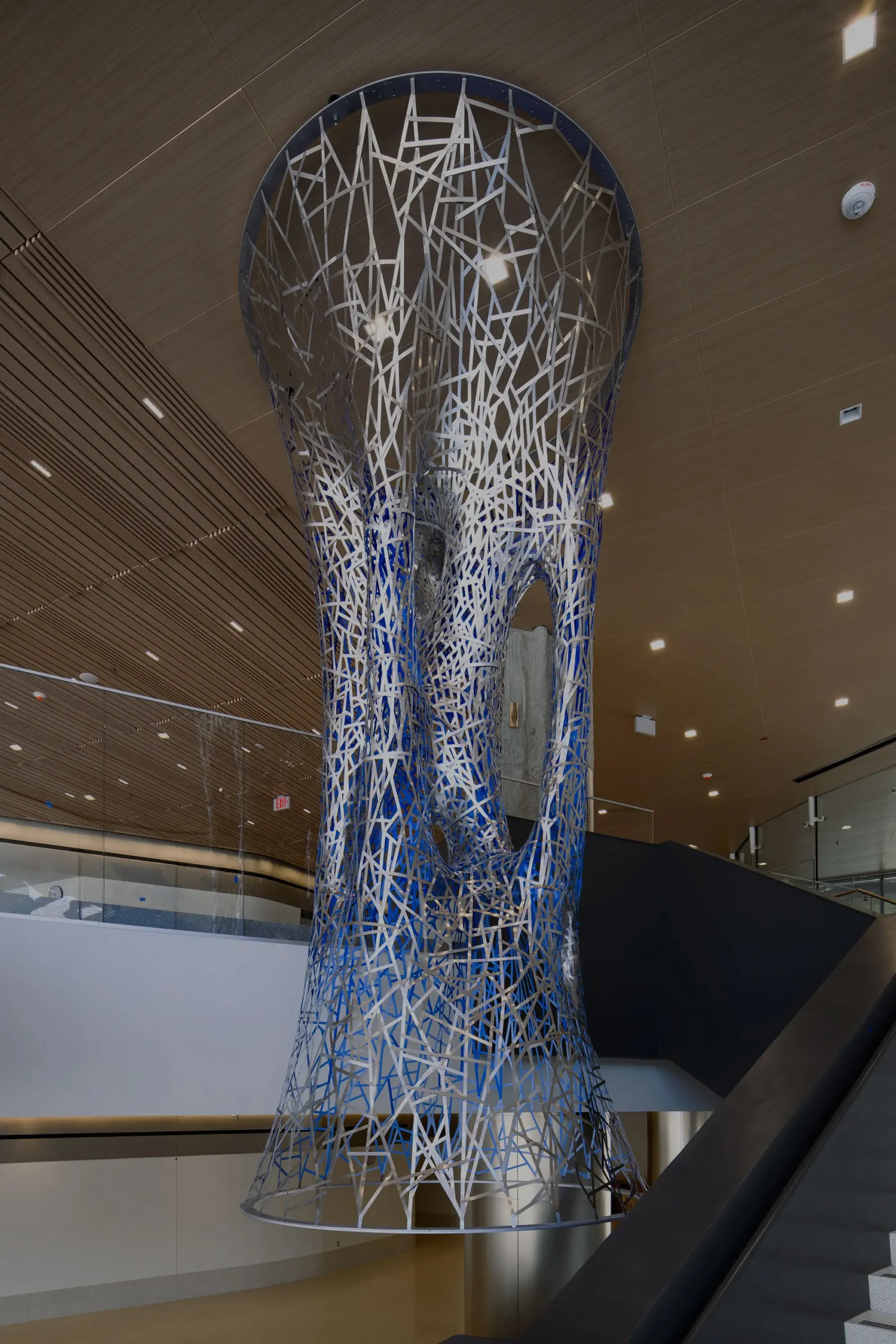
Another pillar of SaludArte Program is the large-scale, site specific sculptures they procure for University Health’s large-scale hospitals. One entitled “Nest” by artist Michael Szivos at SoftLab hangs in the 1,100 square-foot atrium in the middle of the grand staircase at University Health Women’s and Children’s Hospital. The structure is 8’x 8’x 18’ and is made of linear pieces of laser-cut aluminum assembled in a woven pattern much like a bird’s nest. It was a 2023 CODAwards Merit Winner for Healthcare Interiors.
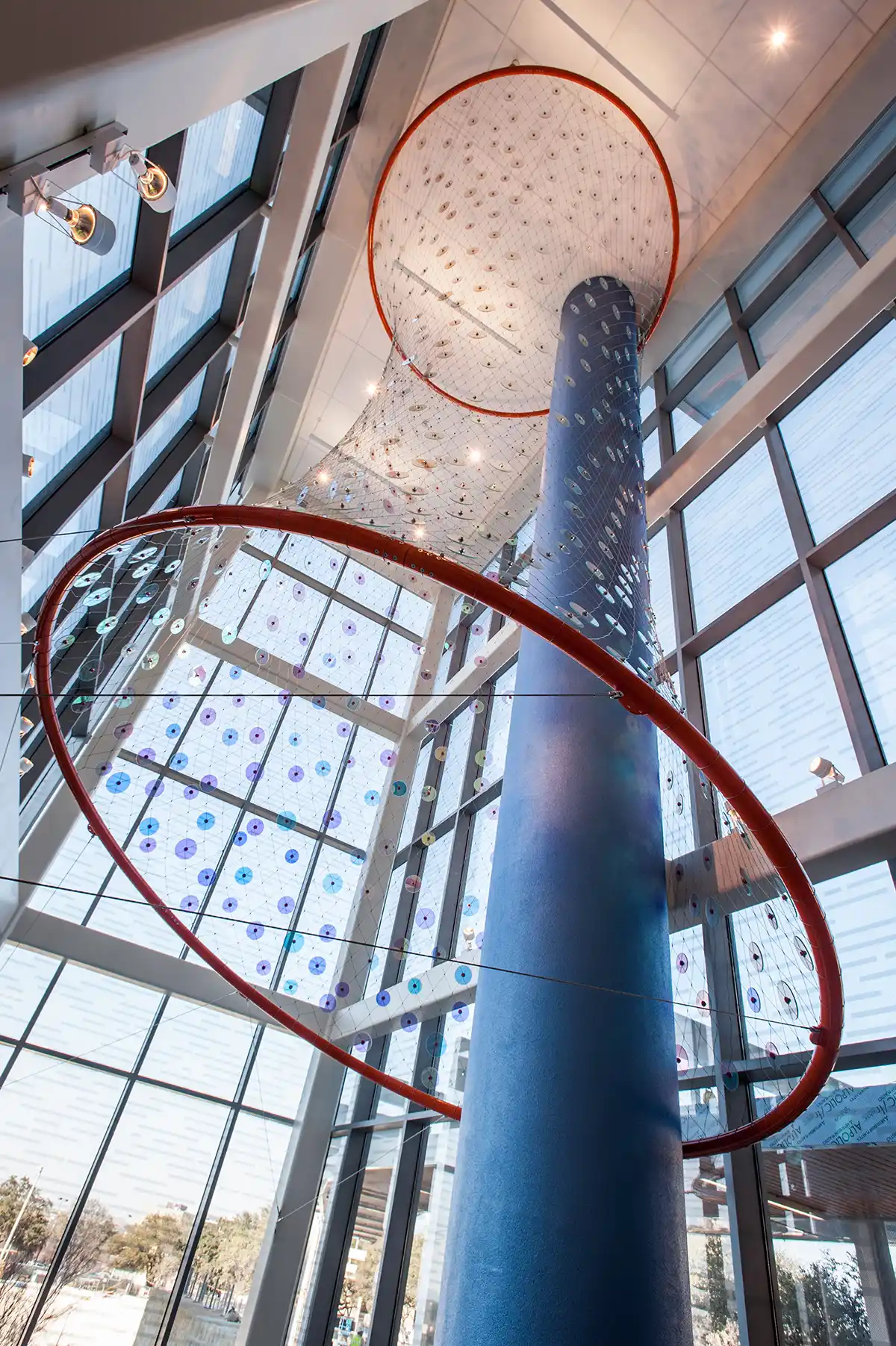
Another, called “Foxglove” by artist Ed Carpenter, is an abstract depiction of the wildflower located in the Sky Tower at University Hospital. The 15′ x 30′ x 46′ high sculpture drops down from the top of the three-story lobby. It’s made of wire net with circles of dichroic glass, a unique material that shifts colors depending on the viewer’s vantage point and the lighting. This is a feature highlighted by the terrazzo floor, also designed by Carpenter, which allows visitors to see the piece from a unique perspective.
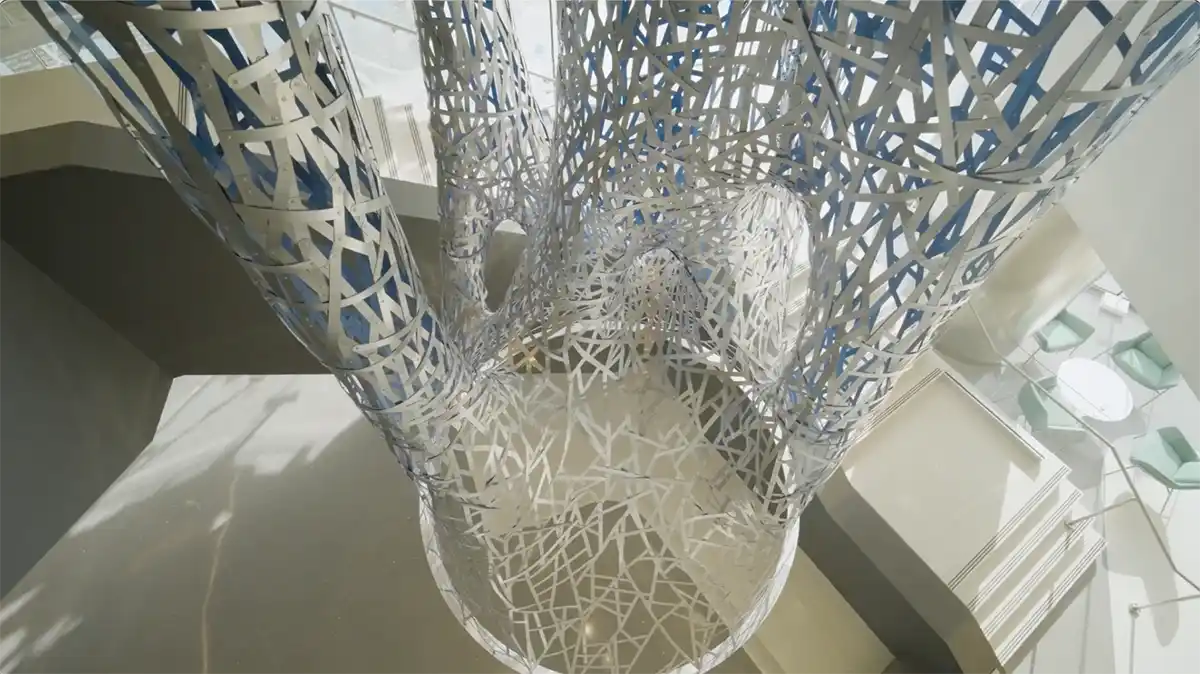
Video: A video tour of University Health Women’s & Childrens Hospital highlights the sculpture “Nest” by Michael Szivos, which was conceived in dialogue with a glass-based artwork called “Mother Birds” by Priscila De Carvalho. Both pieces reinforce the hospital’s mission to care for mothers and children.
Gallery: Large-scale sculptures “Nest” by Mike Szivos, and “Foxglove” by Ed Carpenter from University Health’s SaludArte Program. Photos: Mark Greenberg.
Original art procurement
The SaludArte Program has procured thousands of pieces of original artwork in all media created by staff, patients and local, national and international artists. The art is acquired or received through donation.
This includes over 3,000 pieces of art at the Sky Tower at University Hospital, a 1.1 million square foot building, which boasts a piece of hand-made glass in each patient room.
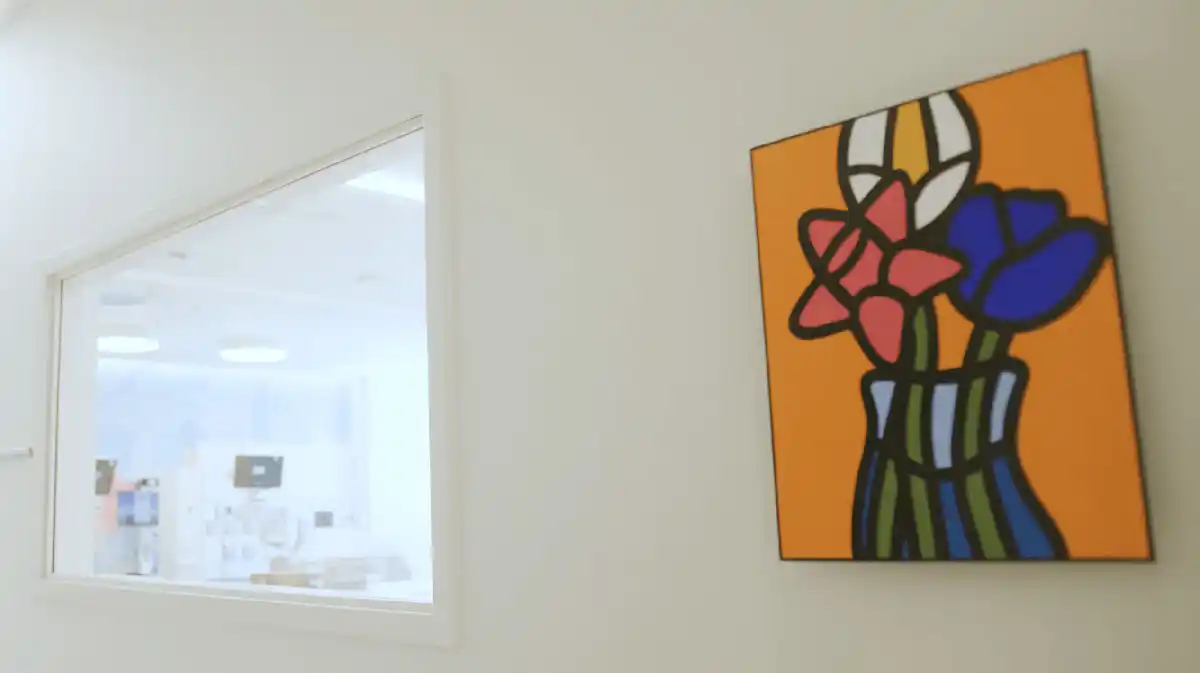
Video: Art is highlighted in a segment of this video tour of the labor and delivery unit at University Health Women’s and Children’s Hospital.
A Strategic Art Maintenance Plan
Hays Lane explains the forethought put into maintaining the hospital art program.
AHL: Everything is framed archivally and bolted or locked to the wall. So, we have a very secure system.
AHL: I feel by doing it right the first time, 10, 20 years from now, you will still have a valued asset. Versus the computer, TV or furniture they put in a patient room. All that gets depreciated from the minute it hits the floor.
JBS: That’s a really good point. Framing archivally is more expensive, but particularly for original artwork, that’s going to protect that piece forever. By spending a few hundred dollars more, depending on the size of the piece, you’re protecting that artwork for the life of the piece.
AHL: Yes, we manage the art in our program as an asset. We also clean our art biannually, which is no small feat. We have a careful maintenance plan that we consider as we select the art.
The Benefits of Art Programming in Healthcare Settings
While data on the benefits of art in healthcare settings is plentiful, Hays Lane says she holds patient stories like treasures.
JBS: I’d love to hear more of your stories about how patients react to the art and what you’ve heard.
AHL: I could tell you stories all day of what people say about how it changes their perspective. How their sister died, and they walked the hallways, just engaging with all the art as she was dying. One woman said, “It saved me from such deep despair.” You know, these incredible, heartfelt stories, I consider a vault full of treasure.
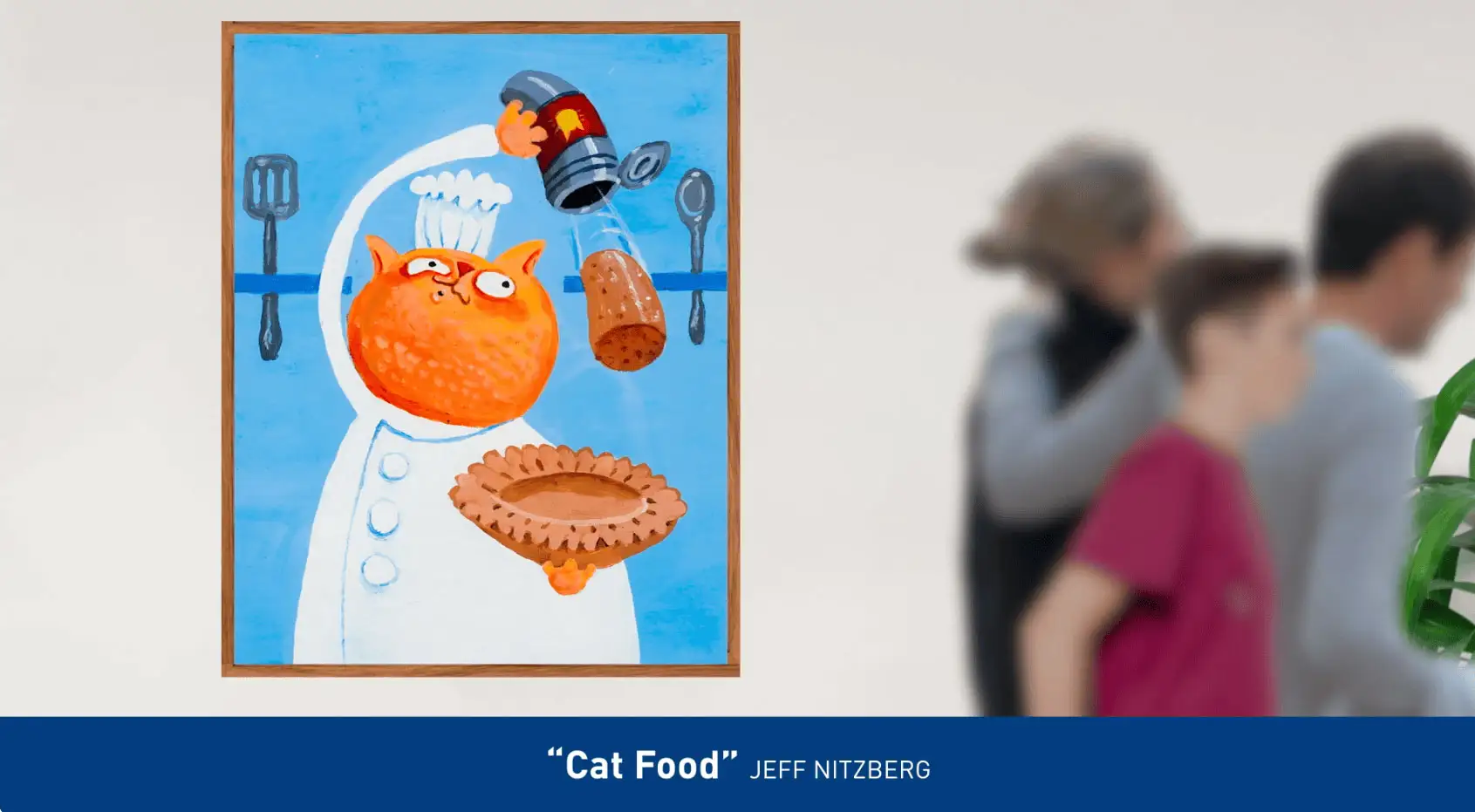
AHL: There was a child who arrived at the hospital in tears, nervously anticipating a potentially painful procedure. Suddenly they noticed an artwork on the wall, by Austin artist Jeff Nitzberg, featuring a cat making a pie. Through tears, they said, “A cat can’t make a pie.”
This real-life story of “positive distraction,” a well-documented benefit in peer-reviewed studies on art in healthcare settings, underscores the power of art for patients and their families.
In addition to displaying original art, University Health SaludArte Program conducts over 75 art workshops and events a year including bedside, art therapist interventions and art workshops for patients and their families.
Hays Lane tells us about a mother who attended art workshops when her infant was in the NICU.
AHL: She would come down every Friday and do our art workshop with us, and she became kind of an assistant to us. She would help us with the workshops and that sense of community was so powerful and happy for her.
Benefits of Art for Healthcare Staff
The SaludArte Program also provides art programming for employees. Viewing art and engaging in creative, participatory art programs is an evidence-based approach to reducing stress, mitigating burnout, and improving mental well-being for healthcare workers.
AHL: We’ve had staff members say to us that doing art and creating in a healing setting gives them strength to get through.
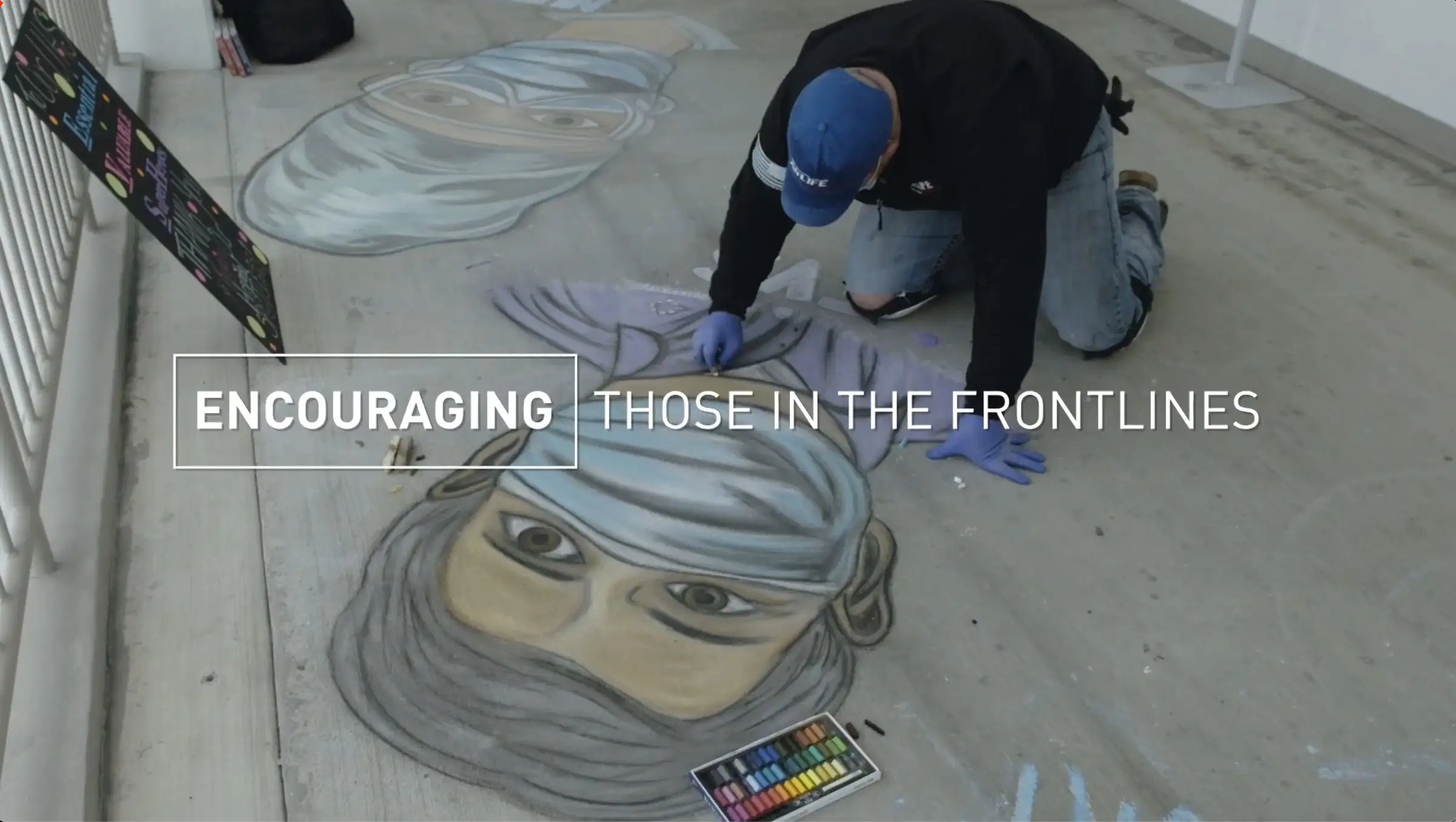
Image: An artist creates a sidewalk mural outside a University Health Systems hospital to encourage staff during the COVID-19 pandemic. Screenshot from University Health video, “University Health Systems Response to COVID-19” on YouTube.
JBS: I was about to ask you about the staff because, on the day that we toured most recently, what stuck with me is how the staff really had great energy about them. I felt that they’re working in this environment that is so beautiful. I’m curious what kind of feedback you’ve had from the staff.
AHL: They take such pride. As you know, Jen, because you’re a pro at this, getting 12 or 20 different people to decide on one type of art, getting all those voices at the table, and that cohesiveness, is not easy.
JBS: No. And it’s really interesting, too, when you walk around. There are so many kinds of art and different media. It feels to me that, even if you weren’t drawn to one piece, there’s such variety. It’s like being at a museum. You’re going to like some pieces. Maybe you don’t like some other pieces, but there’s a variety.
Special Concerns for Art in a Healthcare Setting
JBS: What kind of special concerns are there for a curator in a healthcare setting?
AHL: My job is to figure out how to take care of the art, how to build it, how to secure it, how to make sure it’s got materials that aren’t toxic or that don’t pose a health risk.
AHL: We can have a weaving on the wall if it’s coated with fire protection. We also take into consideration infection control because fabrics, unless they’re treated, can collect dust which can cause infection.
AHL: Corporate people aren’t really worried about infection control, but hospitals are.
AHL: I’m just excited to make the case for what we can do. Not just doing it. Doing it right and doing it well.
Learn More about Art for Healthcare Settings
- SaludArte: Art of Healing Program [University Health]
- The Art of Medicine: Diverse Artwork Improves Patient Experience [University Health]
- Art that Heals: Creativity in Modern Healthcare Environments [CODAworx]
- Art of Healing Virtual Tour [YouTube]
- Painting commissions for all new University Health Women and Children’s Hospital [Sara Vanderbeek, Artist]