
There’s a disengagement crisis in today’s corporate landscape. 80% of employees feel disconnected from their work, according to the latest Gallup research. An issue they say cost the world economy approximately $10 trillion in lost productivity last year, or 9% of GDP.
Decades of research by Gallup shows a strong relationship between the psychological attachment people have to their work, team and employer and key indicators like productivity and profitability, absenteeism and turnover rates, number of safety incidents, quality control and customer loyalty.
As more organizations come to understand the importance of employee engagement in the workplace, they’re taking bolder steps to enrich workplace interiors than at any point since the pandemic. Global design firm Gensler says their clients are doing this with the goal of reconnecting employees with purpose and delivering daily strategic value that attracts talent, drives culture, and sparks innovation. Of the many ways to do this, few will provide longer lasting results than art.
Art is a powerful, engaging way to pass on organizational history, keep organizational goals front and center, and inspire meaning in everyday work. In fact, research shows that top-performing workplaces offer their employees twice the access to art and culture as low-performing ones. Read on to learn how companies are reconnecting workers to purpose with art.
Telling Organizational History with Art
Art can serve as a powerful storytelling device that connects modern workers to an organization’s legacy, roots, and foundational milestones. Academic research published in the Journal of Workplace Learning demonstrates that workplace art significantly facilitates personal connection-making and helps employees connect with the organization’s overarching mission.
CHRISTUS Health: Honoring Legacy with Art
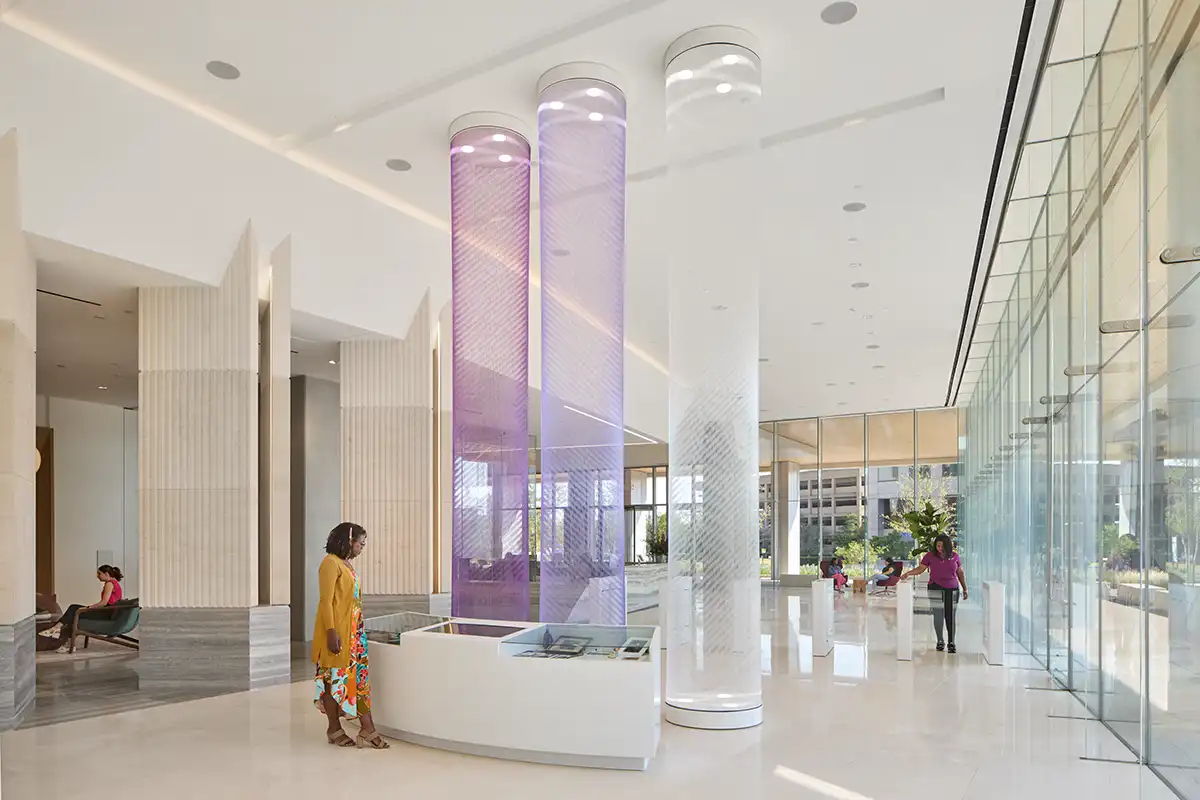
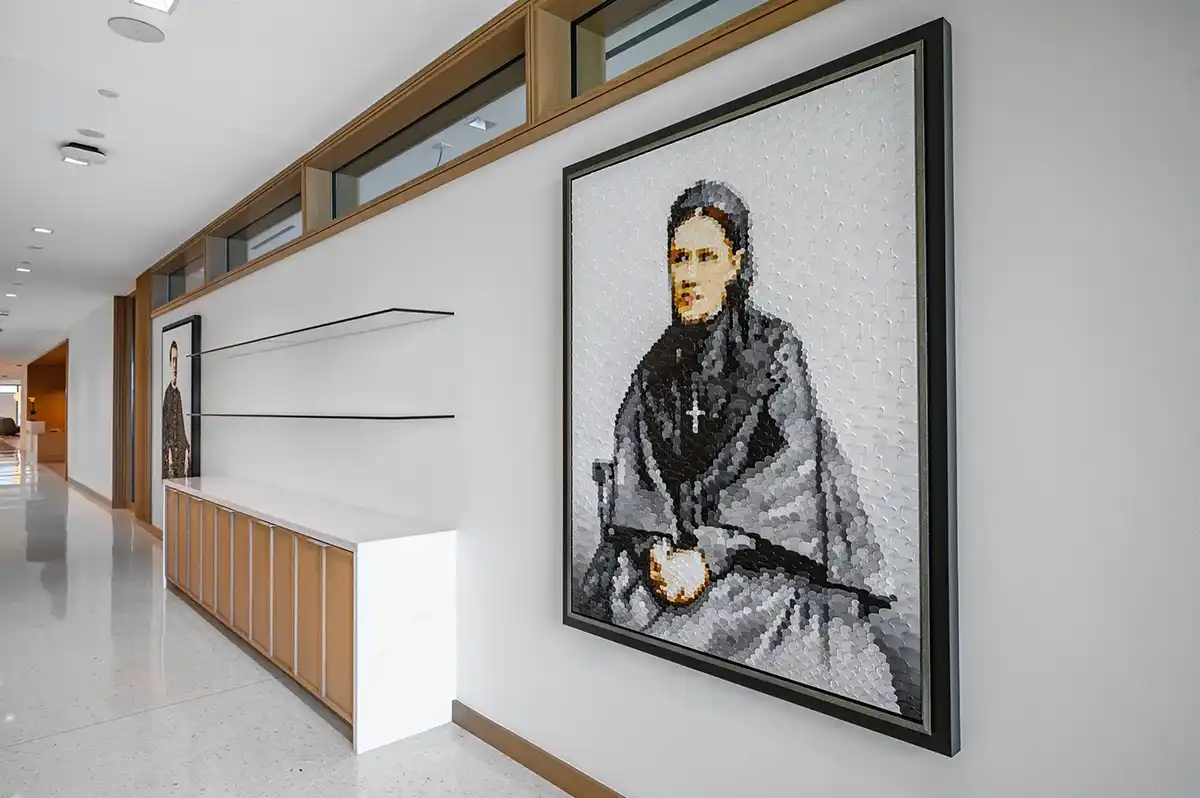
To honor their legacy, CHRISTUS Health commissioned a lobby installation called “Celestial Beams of Unity” by artist Ender Martos. The installation features three, 19-foot monofilament columns that symbolize the three congregations that came together to form CHRISTUS Health. The columns rotate to create a moiré effect, transforming them into metaphorical celestial beams, linking the viewer to the heavens. CHRISTUS also commissioned traditional portraits of the organization’s founders using contemporary palette knife textures to honor the past while looking toward the future.
Tokyo Electron: Connecting Heritage and History with the Present
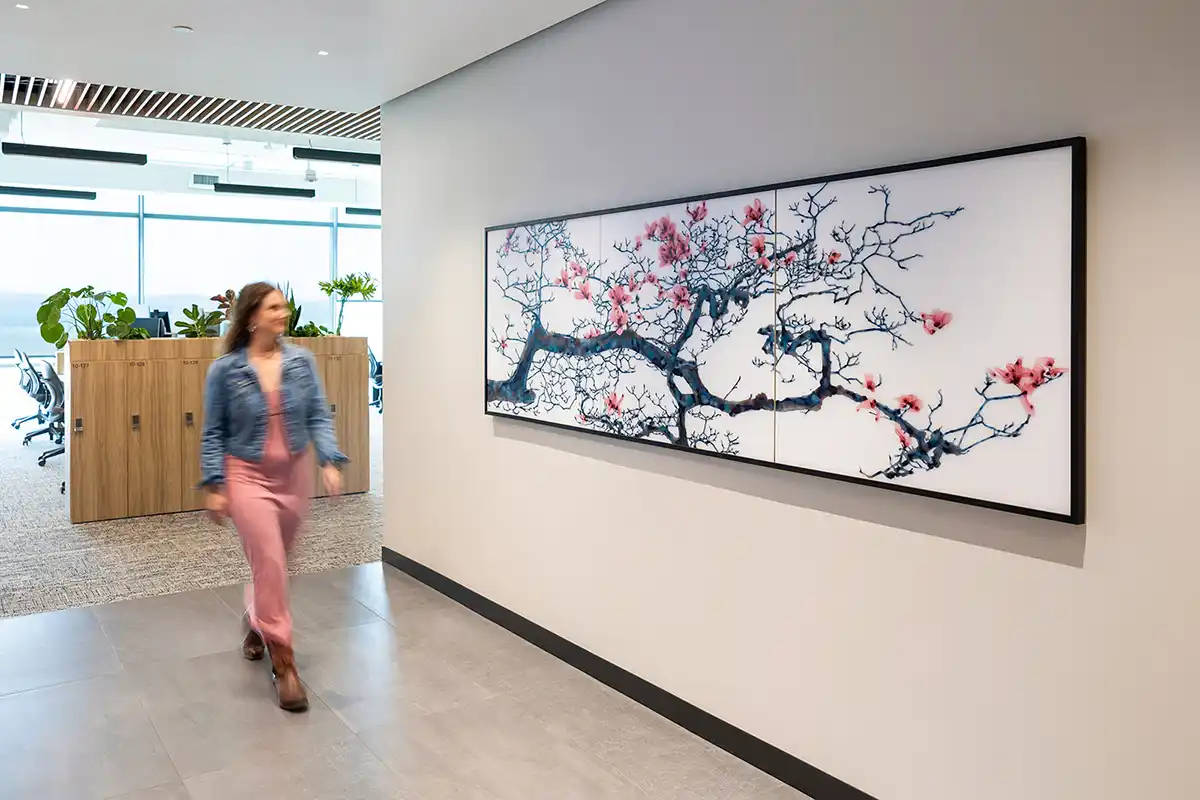
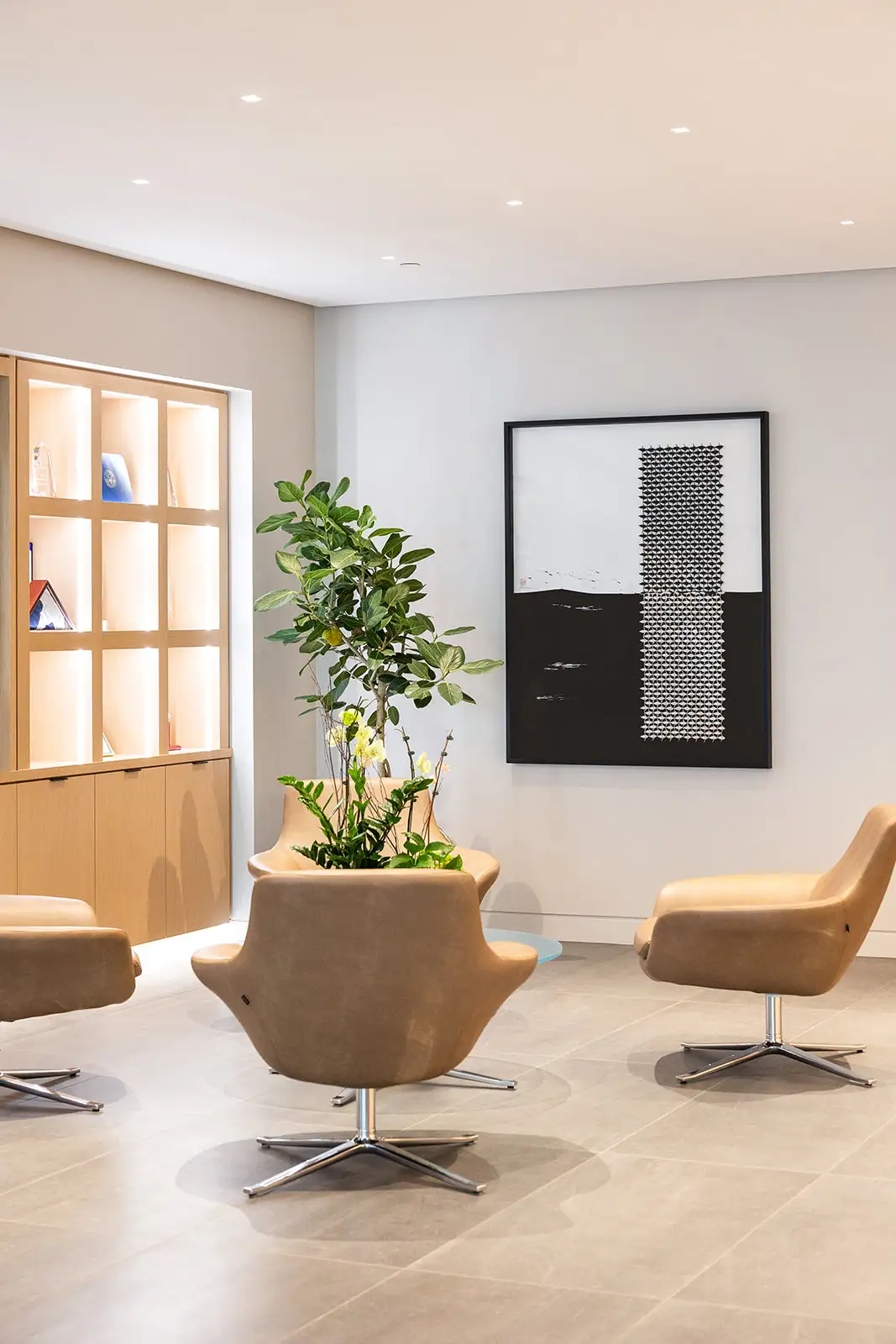
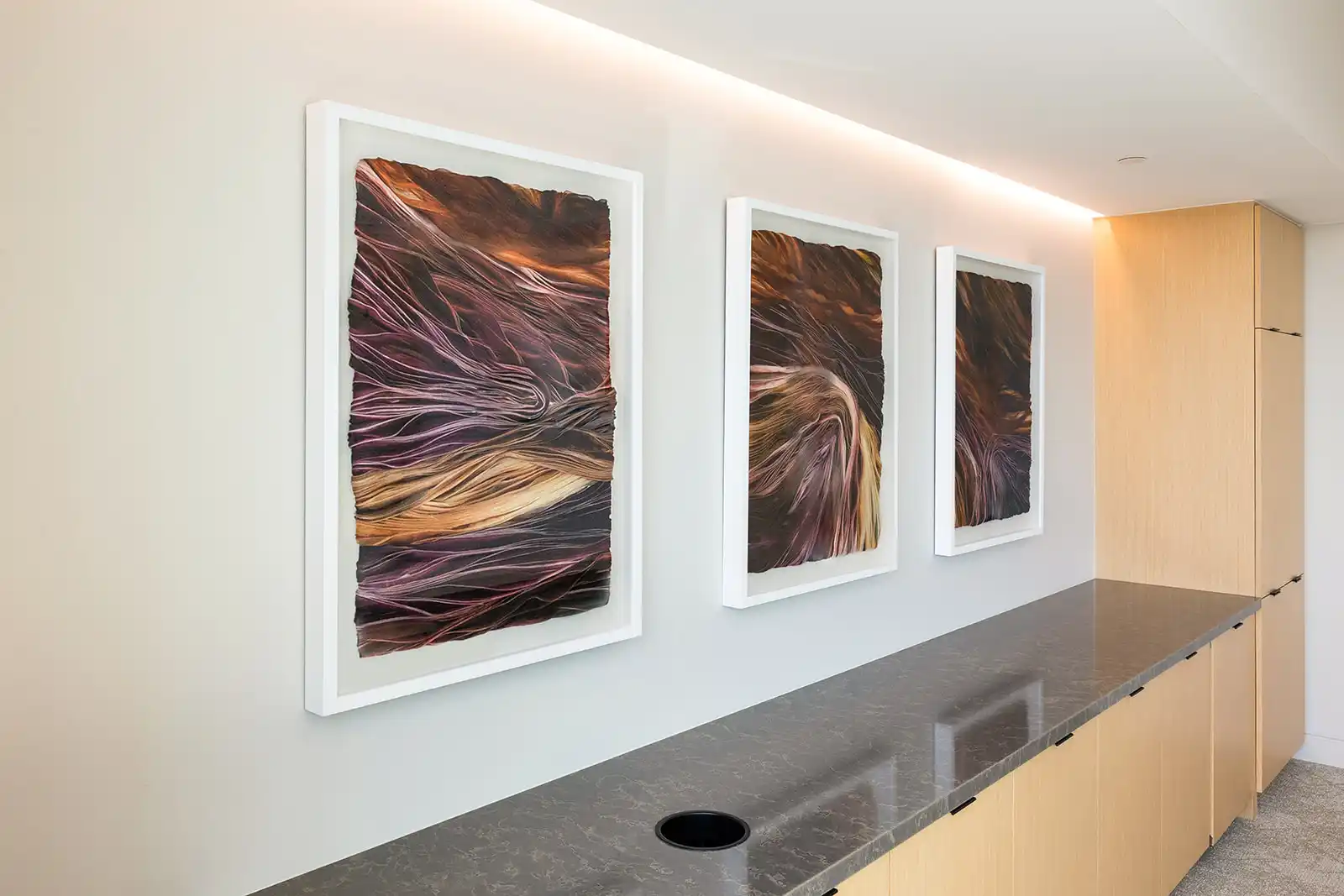
When moving into a new urban office tower from their longtime sprawling campus in East Austin, Tokyo Electron (TEL) formed an employee-led art committee that also served as a change management tool. The committee helped curate a 25-piece collection to bridge their Japanese heritage with their 30-year history in Austin, Texas. The collection thoughtfully blends traditional Japanese techniques, like woodblock prints, renzuru origami, and shibori textiles, with imagery of native Texas foliage.
Using Art to Keep Organizational Goals Front and Center
Every workplace faces the challenge of keeping organizational goals front and center in the minds of their employees. Mission statements and corporate values can become little more than flowery words on a page. Or worse, they can be forgotten during the business of daily operations. But art can make an organization’s goals and ideals come alive for employees in memorable and engaging ways.
Art that evokes feelings of warmth, engagement, and happiness placed intentionally in the workplace can draw employees toward the organization’s goals without feeling overly corporate or sterile.
TIAA Uses Sculpture to Remind Employees What Matters
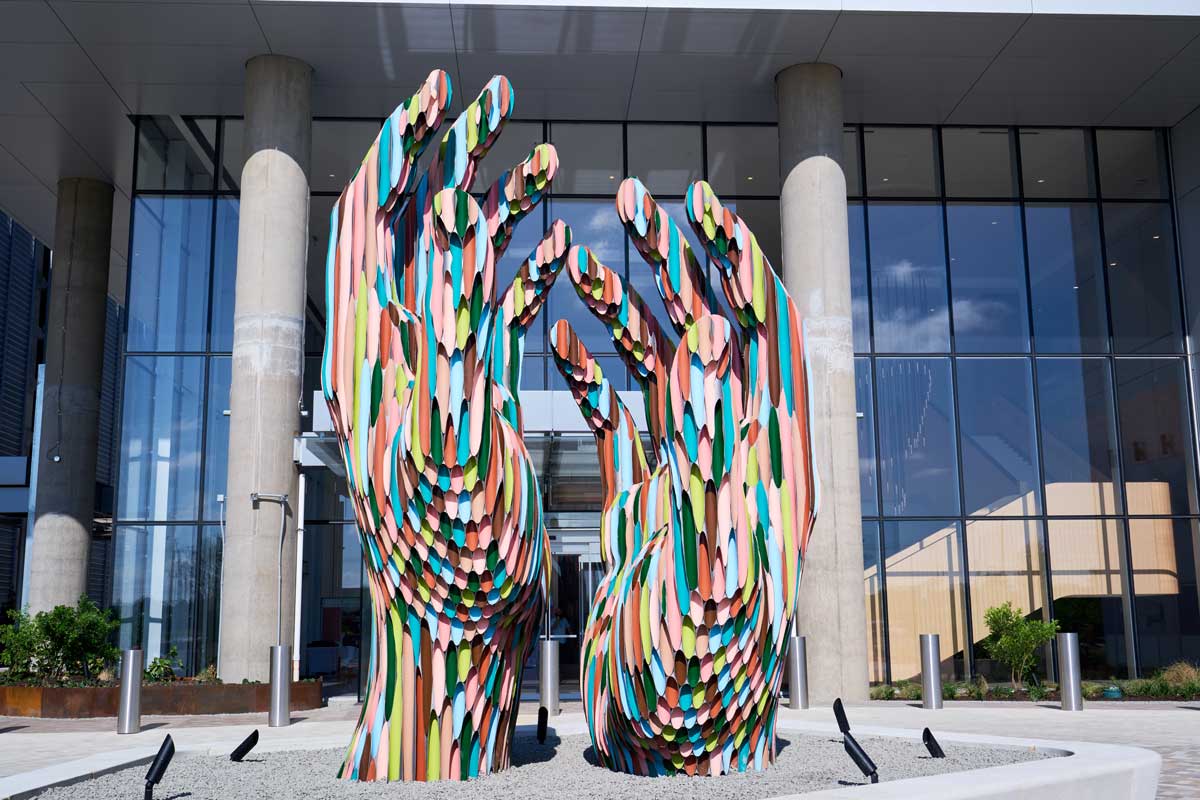
A sculpture located in front of Teachers Insurance Agency of America (TIAA) in Frisco, Texas represents the organization’s commitment to US educators and non-profit workers. Steel pipes sculpted to resemble colored pencils form two outstretched hands, representing education and service. Crayola skin-tone shades are combined with TIAA brand colors to represent TIAA’s value of diversity. The specially commissioned sculpture is located at the entrance of the company’s office tower so that each day when they arrive, employees are reminded of what matters most: the teachers and non-profit workers who make up TIAA’s core customer base.
CHRISTUS Health Uses Art to Bring Employee Wellness to the Office
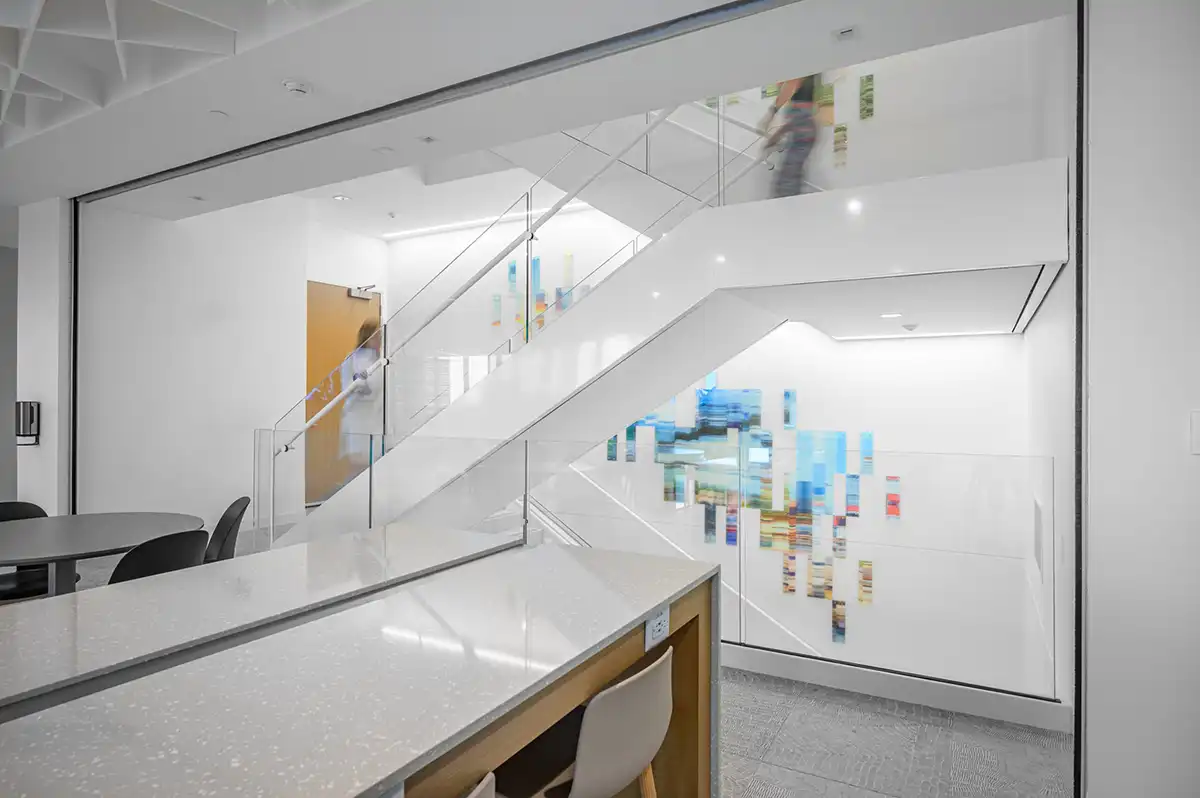
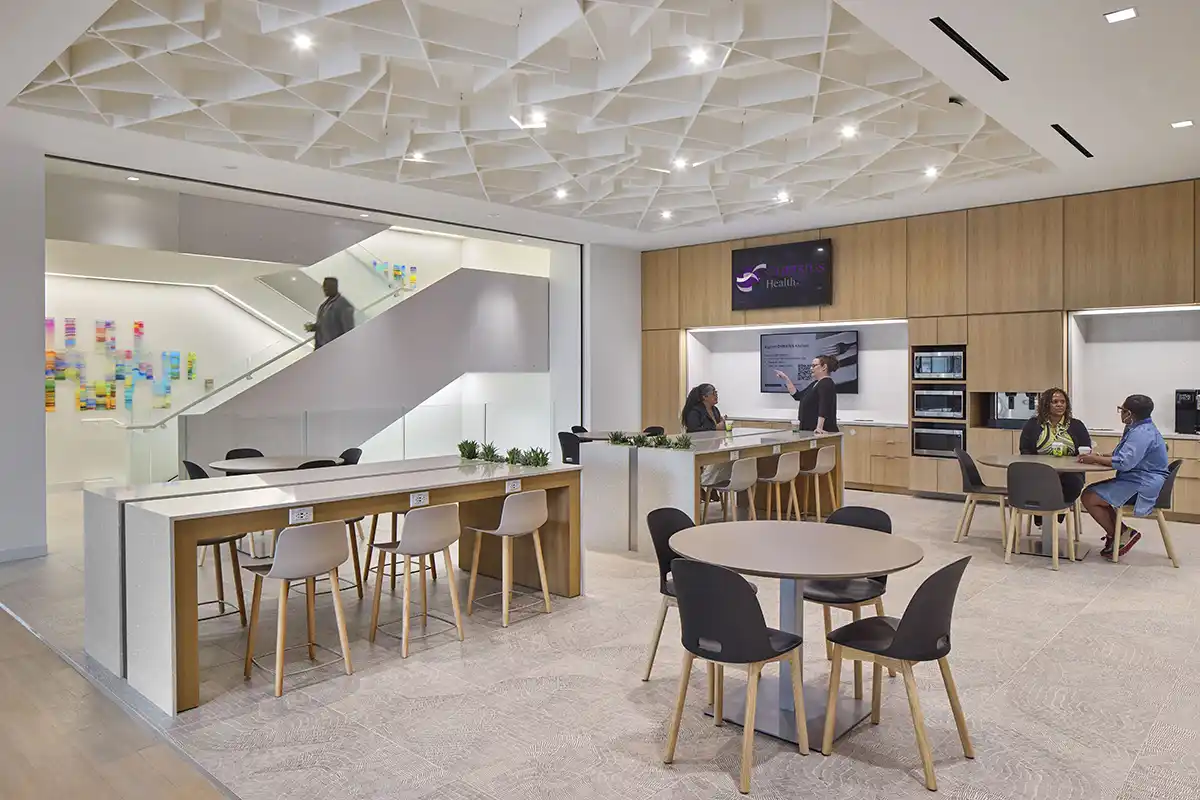
As a medical organization, CHRISTUS Health sees employee wellness as a primary goal. They commissioned a 14-floor abstract art installation inside the monumental stairwell at their Irving, Texas offices to encourage their nearly 2000 support employees to take the stairs. The installation is comprised of photography from all of CHRISTUS Health’s global locations. Created to engage workers as they walk up and down, it’s a wonderful example of aligning workplace design with organizational values.
Art That Imbues Everyday Work with Purpose
The right art can imbue everyday work with purpose by reflecting to employees that their individual contributions are valued and that they are part of a larger community. Research from BetterUp shows that employees with a high sense of belonging perform 56% better, take 75% fewer sick days, and are half as likely to leave. Data from Gallup backs this up. Employees report higher wellbeing and engagement when they view their work as intrinsically rewarding and good for others.
CHRISTUS Health’s Uniform Heart
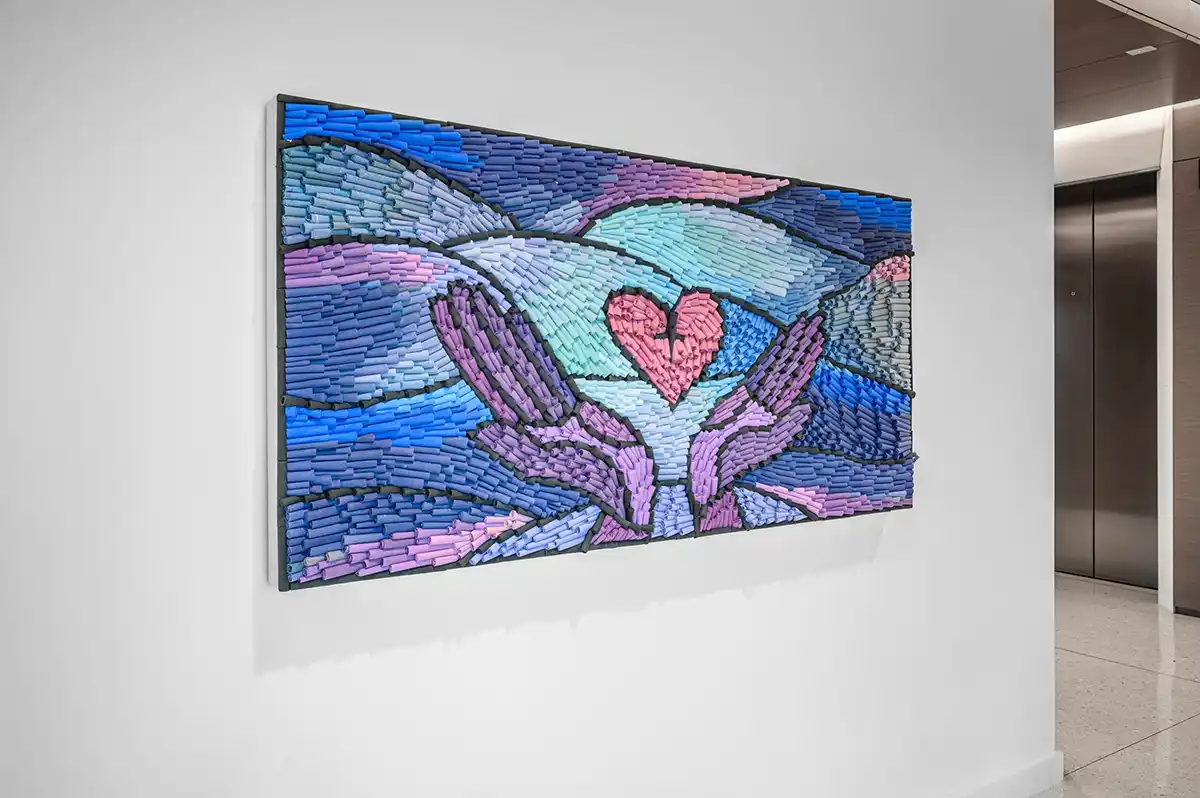
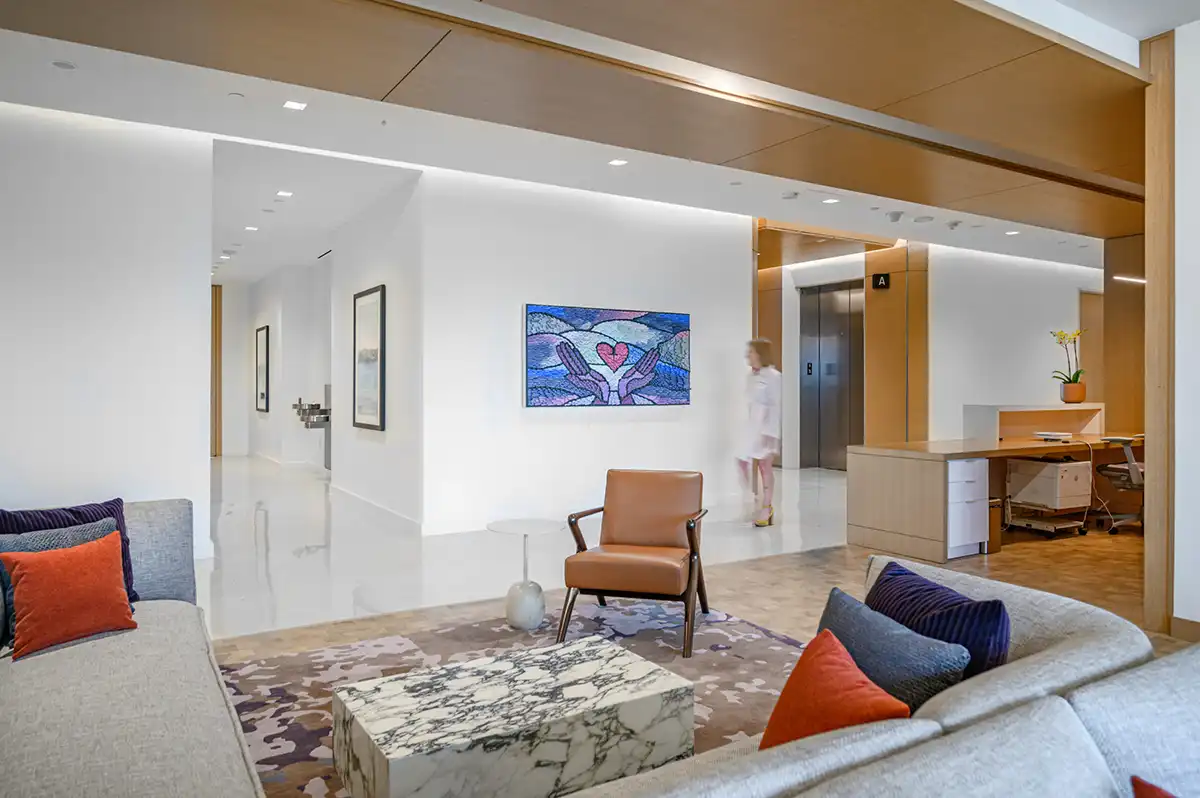
To inspire meaning for the support staff at their headquarters in Irving, Texas, CHRISTUS Health commissioned a textile composition made entirely from scraps of medical scrubs, lab coats and uniforms sent in from frontline workers across their international network. The work, which depicts hands holding a heart, represents the healing work happening on the front lines. Placing it at headquarters provides the support staff in Irving with a profound reminder about the bigger picture. The art is a reminder that the support staff in Irving, though far from the bedside, are an essential part of that healing mission. Their work matters deeply.
Tokyo Electron’s Interlocking Ceramic Pieces
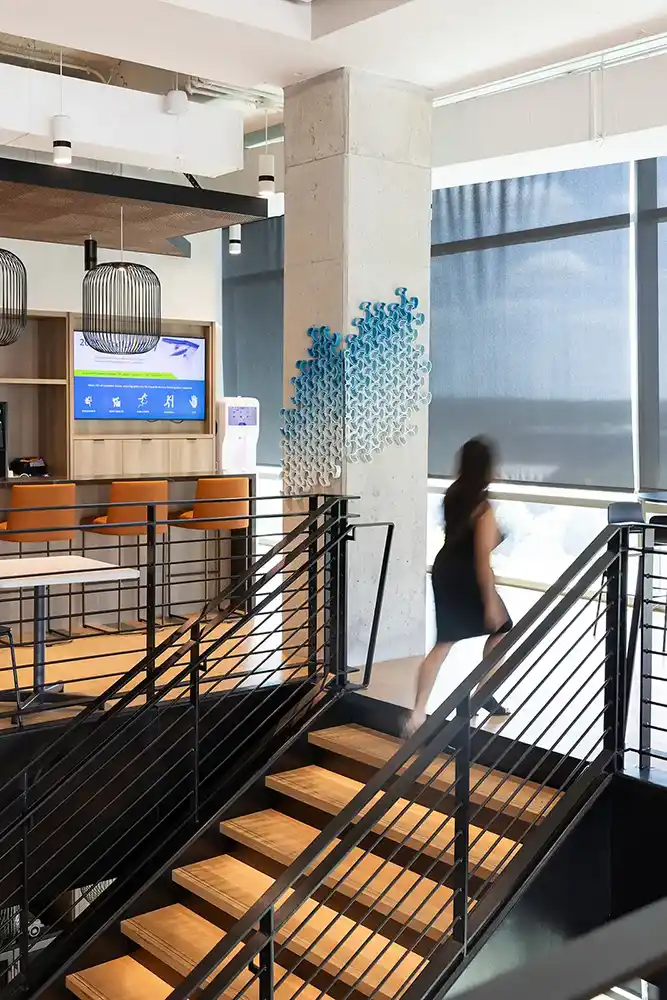
In the communal cafe area at Tokyo Electron’s Austin offices, a massive art piece installation spans three columns across three floors. The installation is composed of interlocking ceramic pieces representing each active Austin employee. Workers are encouraged to pick one and claim it as their own so they can see it and know they are personally woven into the fabric of the office.
Conclusion
Creating an environment where employees feel engaged with their work requires intentional workplace enrichment. Art is a powerful way to do this. The right art strategically executed can elicit an emotional response while telegraphing company history, purpose and goals. By treating visual art as critical performance infrastructure, companies can create vibrant, purpose-driven ecosystems where employees feel a daily, deep connection to their work, their history, and their community.
Learn More about Reconnecting Employees to Purpose with Art
- What Is Employee Engagement, and How Do You Improve It? [Gallup]
- State of the Global Workplace 2026 [Gallup]
- Why Art is Crucial for RTO Success [Art + Artisans]
- Artworks at work: the impacts of workplace art [Christina Smiraglia, Journal of Workplace Learning]
- Art Consulting Services FAQ [Art + Artisans]